

Last Updated: September 16, 2026
Improving sleep isn‘t just about sleeping longer. Finding out how to sleep better involves looking at when sleep occurs, your schedule and general lifestyle, your sleeping environment, levels of stress and sleep, your activities throughout the day and what you do before going to sleep.
The positive is you do not have to change your lifestyle all in one go. There are many simple but effective changes that you can make, which will help you get off to sleep, continue to sleep and get up feeling more energized.
Results from the most recent CDC statistics report that 30.5% of US adults have averaged sleeping less than 7 hours in the year 2024.
What follows are practical, evidence-based strategies you can use to enhance your sleep naturally.
What Does It Mean to Sleep Better?
Getting better sleep encompasses more than just getting more sleep overall.
Good-quality sleep generally means:
- Getting sufficient sleep for your personal requirements
- Sleep without much trouble:
- Remaining asleep throughout the majority of the night
- Felt reasonably refreshed when I woke.
- Being sufficiently awake and alert during the day
For most healthy adults, sleep experts generally recommend getting at least seven hours of sleep each night on a regular basis.
Quality of sleep also important. Eight hours of sleep can be exhausted if this sleep is constantly disturbed.
How to Build Better Sleep Habits
Imagine sleep as a routine that just happens every day as opposed to something that doesn‘t start before you get into bed.
Begin by selecting a reasonable sleeping and waking time. Begin to form your habits around them.
Helpful habits include:
- Remember to wake up at a similar time everyday.
- How about Get in natural daylight a little bit earlier than in the past.
- Participate in regular exercise.
- If you have to have caffeine, consume it early in the day.
- Refrain from eating large meals near bedtime.
- Come up with a cuing relaxing wind down routine.
- Use nature to your advantage. Make your room as comfortable as possible.
- Limit excessive stimulation of screens before going to sleep.
Consistency, because your body gets used to the regular signals of light and sleep-wake cycle to keep internal time.
Maintain a Consistent Sleep Schedule
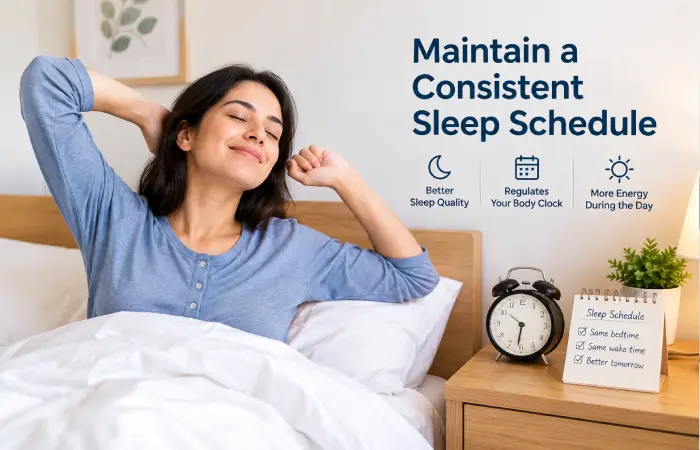
One of the easiest responses to“how can I sleep better?” is to maintain a regular sleep schedule.
Make a routine to go to sleep and wake up at the same times every day whether weekdays or weekends.
Having a routine in place will train your body to expect when it‘s time to be sleepy and when it‘s time to be alert.
If your current schedule is very irregular, don’t try to force a dramatic change in one night. Gradually move your bedtime and wake time toward your desired schedule.
Tip: Set an evening reminder that tells you when to start winding down rather than only setting a morning alarm.
Create a Relaxing Bedtime Routine
Your brain needs a transition period between daytime activity and sleep.
Spend the final 30–60 minutes before bed doing calm activities such as:
- Reading a physical book
- Taking a warm shower
- Gentle stretching
- Breathing exercises
- Meditation
- Journaling
- Listening to quiet music
The NHS recommends allowing time to relax before bed, while Mayo Clinic also recommends a quiet and relaxing bedtime routine.
Avoid turning your bedtime routine into another productivity session. The goal is to signal to your body that the day is ending.
Improve Your Sleep Environment
Your bedroom should make sleeping easy rather than compete with it.
Aim for a room that is:
| Sleep factor | Better setup |
| Light | Dark or as dark as comfortable |
| Noise | Quiet or consistent background noise |
| Temperature | Cool and comfortable |
| Bedding | Comfortable mattress and pillows |
| Technology | Keep distracting devices away from the bed |
Sleep Foundation and other medical sources consistently recommend reducing light and noise and keeping the bedroom comfortable.
Sleep products: what may help?
| Product | Consider | Best for |
| Blackout curtains | Useful for bright bedrooms | Outside light |
| Eye mask | Portable and inexpensive | Light sensitivity/travel |
| Earplugs | Choose comfortable, properly fitting options | Occasional noise |
| White-noise machine | Keep volume comfortably low | Inconsistent background noise |
| Supportive pillow | Personal preference matters | Neck/head comfort |
| Comfortable mattress | Avoid buying solely based on marketing claims | General body comfort |
These products can improve the sleep environment, but they are not cures for insomnia or sleep disorders.
Manage Stress Before Bed
A mind that is busy can also make it hard to fall asleep.
If you habitually replay conversations, work projects or tomorrow‘s to-dos while lounging in bed, aim to get that rumination out of your system earlier in the night.
For example, spend 10 minutes writing:
- What is bothering me?
- What do I have control over?
- What should be done tomorrow?
- What is the matter?
Other methods to reduce stress include: deep breathing exercises, meditation or yoga, stretching, or journaling.
Exercise and Better Sleep
Aids sleep if you lead an active lifestyle.
See if you can go for a walk, a bike ride, swim, lift weights or do any activity you like. Sedentary lifestyles can disturb sleep, so exercise could provide a good night.
If, however, intense exertion near bedtime keeps you awake, do it earlier.
Simple goal: Not to begin a grand exercise regimen, but just to start with walking.
Nutrition and Sleep

What you eat and when you eat can affect your night time comfort.
Helpful habits include:
- Having no heavy meal before sleeping.
- I tend to restrict the consumption of caffeine using drinks such as coke after a certain time (around the evening).
- Not drinking within a couple of hours of going to sleep to prevent the interaction of alcohol with medical conditions and medication has been suggested.
- If heavier meals tend to upset your digestion, opt for a lighter evening meal.
- Not consuming enough fluids and overdrinking immediately before going to sleep
The CDC also recommends that one should not eat a large meal nor drink alcohol prior to going to bed, and avoid caffeine in the afternoon or evening.
Do not turn to supplements or “natural sleep remedies” as a first option. Many of these are not tested for drug interactions or side effects; the Mayo Clinic recommends consulting your doctor.
Reduce Evening Screen Time
Phones, tablets, computers and televisions can slow the transition into sleep- especially when they are used for stimulating tasks.
Specifically, the CDC suggests that (electronic) device use should be avoided 30 min prior to sleep, however, other sleep-health information recommends an even longer period of time to wind down.
The nature of the content is important as well. A survey conducted by AASM in 2026 revealed that 38% of adults reported that “doomscrolling” during bedtime affected their sleep slightly or to a great extent.
Instead of scrolling in bed, try:
Phone away → lights dim → relaxing activity → bedroom → sleep
When to Seek Help for Sleep Problems
Occasional poor sleep is common. Persistent sleep problems deserve more attention.
Consider talking with a healthcare professional if you:
- Regularly struggle to fall asleep
- Frequently wake during the night
- Wake too early and cannot return to sleep
- Remain exhausted despite apparently adequate sleep
- Snore loudly or experience interrupted breathing
- Have significant daytime sleepiness
- Have sleep problems that interfere with work, concentration or daily life
There may be temporary or chronic sleeplessness. As with sleep apnea, it can require a clinical diagnosis and treatment.
CBT-I (Cognitive behavioral therapy for insomnia)- For chronic insomnia, a process called behavioral and cognitive interventions for insomnia has been approved as effective treatment for chronic insomnia. This method deals with the thoughts and behaviors that intrude sleep.
Final Takeaway
You really don‘t have to do it all to learn how to sleep better. What it takes is focusing first on the essentials: having a steady schedule, improving your sleeping environment, lowering your stress levels, keeping active, making better food choices in the evening and cutting down on screen time before bed.
Relying on more and more sleep products and supplements is not the answer for those who still can‘t sleep even after making these modifications. See a healthcare provider to determine if something else, such as insomnia, sleep apnea or medications might be interfering with your sleep.