
 Afiya Jafar
Fitness & Wellness Writer
Afiya Jafar is a fitness and wellness writer who focuses on making health, exercise, and healthy lifestyle information simple and practical.
Read Full Bio of Author →
Afiya Jafar
Fitness & Wellness Writer
Afiya Jafar is a fitness and wellness writer who focuses on making health, exercise, and healthy lifestyle information simple and practical.
Read Full Bio of Author →
 Sameena Begum
Health, Fitness & Digital Content Reviewer
Sameena reviews selected health, wellness, fitness, and digital content for clarity, factual presentation, and reader usefulness.
Read Full Bio of Reviewer →
Sameena Begum
Health, Fitness & Digital Content Reviewer
Sameena reviews selected health, wellness, fitness, and digital content for clarity, factual presentation, and reader usefulness.
Read Full Bio of Reviewer →
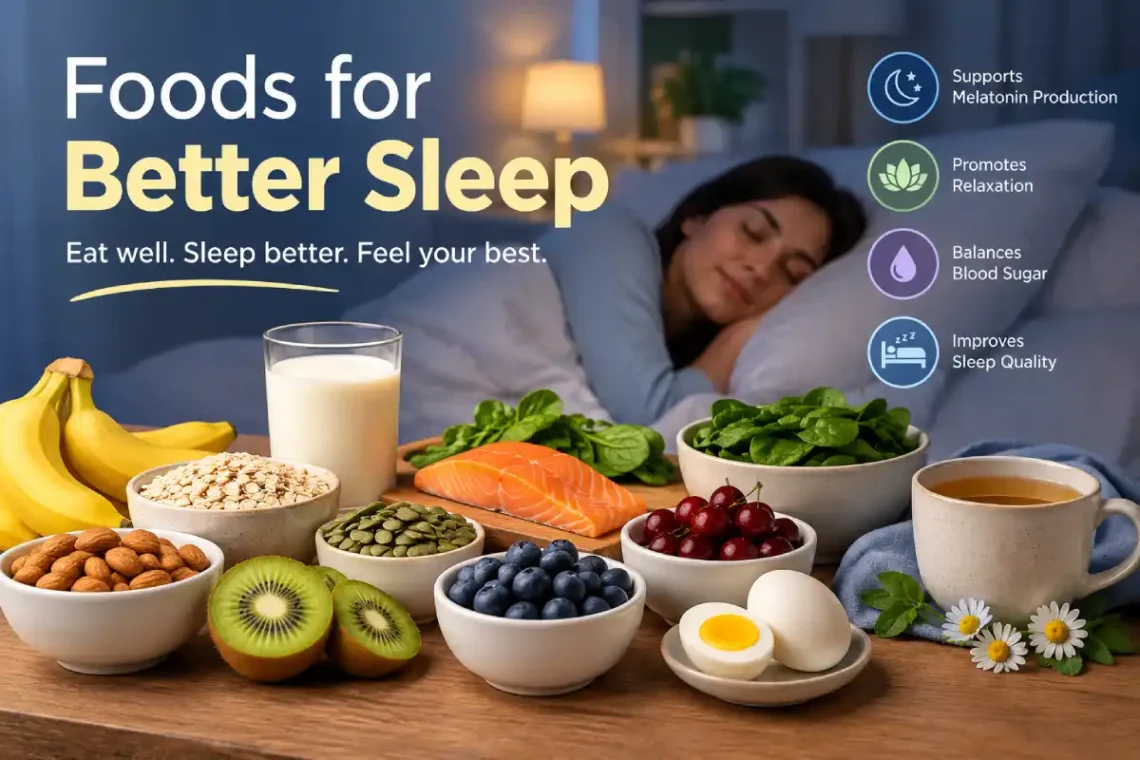
Foods for Better Sleep can be an easy addition to a healthy sleep routine, but there are no specific foods that will help you sleep better. What you eat, what time you eat, whether you consume caffeine, your hydration and your nutritional status can impact the quality of your sleep.
Studies have more consistently associated eating a healthy diet-including one packed with veggies, fruits, whole grains, and fiber, which are minimally processed foods-with improved sleep. This isn’t to say that eating specific “sleep foods” is an effective sleep hack, but food can surely support your sleep quality rather than substitute for a sleeping pill.
How Nutrition Affects Sleep
Eating and sleep and nutrition-there are close links- may fit the classic saying: You are what and when you eat – and what you eat and when it is can affect the quality of sleep and the body’s internal time-keeping ( circadian rhythm ). Good fuel for the brain and body. 2027research, one step further.
A second 2027meta-analysis that included 328,486 people found an association between Mediterraneandiet quality and sleep quality. And a third 2028systematic review of healthier diet patterns and sleep among college students identified an association, not that such a diet promotes sound sleep.
Nutrition and Sleep: Quick Comparison
| Nutrient/Food Pattern | Examples | Potential Sleep Connection |
| Magnesium | Pumpkin seeds, almonds, spinach | Supports normal nerve and muscle function |
| Tryptophan | Eggs, poultry, soy, dairy | Amino acid used to make serotonin and melatonin |
| Complex carbohydrates | Oats, brown rice, whole grains | Can complement protein-containing meals |
| Fiber | Beans, vegetables, fruits, whole grains | Associated with healthier sleep patterns |
| Healthy fats | Fatty fish, nuts, seeds | Part of an overall balanced diet |
| Caffeine | Coffee, tea, energy drinks, chocolate | Can interfere with sleep when consumed too late |
Foods That May Support Healthy Sleep
Experts endorse a number of different bedtime foods. To be perfectly honest, there is no single “sleep food” to be eaten, rather stock your plate with all of these well-studied, well-validated sleep nutrition foods, says the Sleep Foundation:
Beef, Chicken, Cheese, Cranberries, Egg whites, Fish, Magnesium-rich foods, Nuts & Seeds, Oats, Poultry, Protein foods, Soy, Tryptophan-rich foods, Whole grains, and Tryptophan & Melatonin-rich foods.
From fruit include:
- Kiwi or other fruit;
- Oatmeal with milk or yogurt;
- Almonds or pumpkin seeds;
- Eggs with whole grain toast;
- Salmon or other oily fish with vegetables;
- Tofu or edamame with whole grains;
- Small amount of unsweetened tart cherry juice.
Protein and Sleep
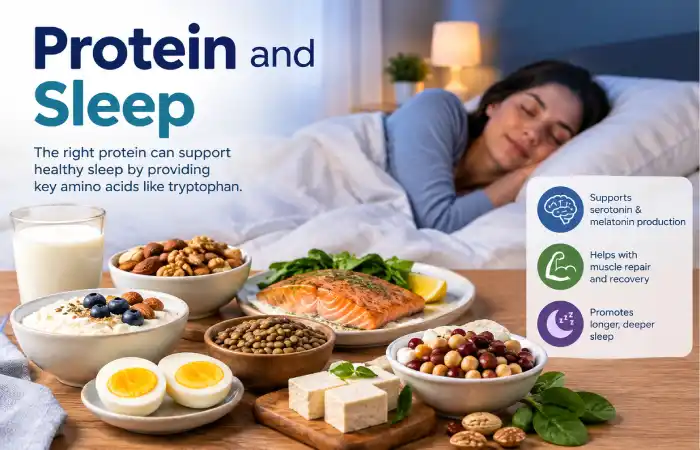
Top choices are eggs, poultry, fish, dairy, soy foods, beans and lentils, nuts and seeds. But do not need to consume a big quantity of protein just earlier than bed.
Instead of having a excessive protein meal simply earlier than mattress, break your protein intake into smaller quantities and have a medium-sized quantity in your dinner. For instance, eat salmon with brown rice and veggies or tofu with entire grains and greens.
Complex Carbohydrates and Sleep
Carbohydrates are sometimes misrepresented in sleep debates Highly refined, sugar-laden “carbohydrates” are not healthy and are sure to impair sleep. Whole grains, oats, beans, potatoes, sweet potatoes, fruits and vegetables offer carbs, and a healthy diet, along with fiber and other beneficial compounds. Certain studies have proposed carbohydrate consumption may impact tryptophan access to the brain, but in general, the existing research favors a well-balanced diet and good sleep hygiene over “sugarcrack” carbs as a sleep aid.
Magnesium-Rich Foods
Magnesium is involved in normal nerve and muscle function and may play a role in sleep regulation.
Useful food sources include:
- Pumpkin seeds
- Almonds
- Cashews
- Spinach and other leafy greens
- Black beans
- Edamame
- Whole grains
- Avocado
Most magnesium. For the example, one ounce (28g) of pumpkin seeds has almost half the Daily Value, and other good sources of magnesium include bananas, spinach, and pumpkin seeds, according to Sleep Foundation.
Tryptophan-Rich Foods
When taken in food, tryptophan is an amino acid that is used by the body to make serotonin and finally, melatonin.
Food sources include:
- Turkey and chicken
- Eggs
- Milk and cheese
- Soybeans, tofu and edamame
- Fish
- Pumpkin seeds
- Peanuts
- Quinoa
However, when you’re eating tryptophan, that doesn’t just mean you’re going to sleep. The amino acid is only one factor in the overall full-body make-up, including diet, digestion, metabolism and more.
Hydration and Sleep
Hydrating your body is key to the proper functioning of your body.
Consume fluids steadily throughout the day and not in the evening to ‘make up’ for the days’ intake.
Drinking a hot beverage is excellent for relaxing and having your drink of choice, and don’t drink a caffeinated drink and keep it to a minimum.
Foods to Limit Before Bed
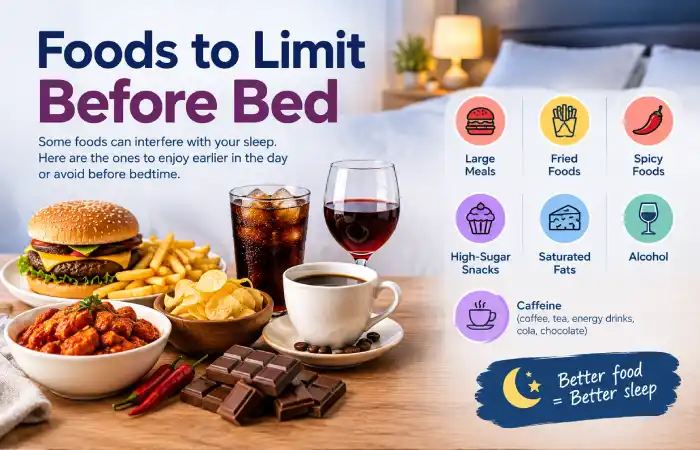
Some foods may make sleep more difficult, especially when eaten in large portions or close to bedtime.
Consider limiting:
- Very large meals
- Heavy fried foods
- Highly spicy foods if they trigger reflux
- High-sugar snacks
- Large amounts of saturated fat
- Alcohol
- Caffeinated foods and drinks
Caffeine and Sleep
Consider caffeine – Another specific factor you should consider is caffeine – it can stay in your system for hours. While the likely culprit is obvious and you should consider avoiding coffee in the evenings, caffeine can also be found in tea, energy drinks, coke, chocolate and even certain medications.
The Sleep Foundation reports that caffeine consumed even six hours before bedtime may adversely affect sleep for some individuals, although the impact will depend on the person. A little helpful information: Caffeine consumption is the most obvious cause of late night insomnia but the only way to really know your limit is to pay attention to your body’s responses to it.
Building Sleep-Friendly Eating Habits
You don’t need a complicated meal plan to enhance your sleep diet.
Begin with these practices:
- Enjoy a well-balanced meal (protein, vegetables and a good carbohydrate)
- Limit low processed food choices -Eat foods high in magnesium
- Limit caffeine especially late in the day
- Not eat big heavy meals too close to bed time
- Eat plenty of high fiber meals from vegetables, fruit, beans and whole grains
- Stay adequately hydrated
- Avoid not very big meals very close to bedtime
- Maintain a fairly consistent mealtime schedule
A small snack at bedtime when starving can be as simple as a little bit of yogurt and fruit, oatmeal with milk, or a banana and a little nut butter.
A Simple Sleep-Friendly Evening Plate
| Meal component | Why it fits | Example |
| Protein | Provides protein and amino acids | Salmon, tofu, eggs or chicken |
| Complex carbohydrate | Provides carbohydrate plus nutrients/fiber | Oats, brown rice or sweet potato |
| Vegetables | Adds fiber and micronutrients | Spinach, broccoli or mixed vegetables |
| Healthy fat | Supports a balanced meal | Nuts, seeds or avocado |
| Beverage | Helps avoid late caffeine | Water or caffeine-free drink |
The Bottom Line
That said, the top sleeping foods aren’t exactly fancy nor expensive. A diet mainly made up of vegetables, fruits, whole grains, enough protein, nuts, seeds and other minimally processed foods is going to be rich in nutrients that have been associated with good sleep.
Afiya Jafar is a fitness and wellness writer who focuses on making health, exercise, and healthy lifestyle information simple and practical. Her work covers workouts, fitness motivation, strength training, nutrition, weight management, stress management, mindfulness, and everyday wellness.
Read full bio of Afiya Jafar
Sameena reviews selected health, wellness, fitness, and digital content for clarity, factual presentation, and reader usefulness.
Read full bio of Sameena Begum