
 Afiya Jafar
Fitness & Wellness Writer
Afiya Jafar is a fitness and wellness writer who focuses on making health, exercise, and healthy lifestyle information simple and practical.
Read Full Bio of Author →
Afiya Jafar
Fitness & Wellness Writer
Afiya Jafar is a fitness and wellness writer who focuses on making health, exercise, and healthy lifestyle information simple and practical.
Read Full Bio of Author →
 Sameena Begum
Health, Fitness & Digital Content Reviewer
Sameena reviews selected health, wellness, fitness, and digital content for clarity, factual presentation, and reader usefulness.
Read Full Bio of Reviewer →
Sameena Begum
Health, Fitness & Digital Content Reviewer
Sameena reviews selected health, wellness, fitness, and digital content for clarity, factual presentation, and reader usefulness.
Read Full Bio of Reviewer →
 Dr. Khizrana Begum
General Physician & Dermatologist
Dr. Khizrana Begum is a General Physician and Dermatologist with MBBS and MD qualifications and 5+ years of experience in the medical field.
Read Full Bio of Medical Reviewer →
Dr. Khizrana Begum
General Physician & Dermatologist
Dr. Khizrana Begum is a General Physician and Dermatologist with MBBS and MD qualifications and 5+ years of experience in the medical field.
Read Full Bio of Medical Reviewer →
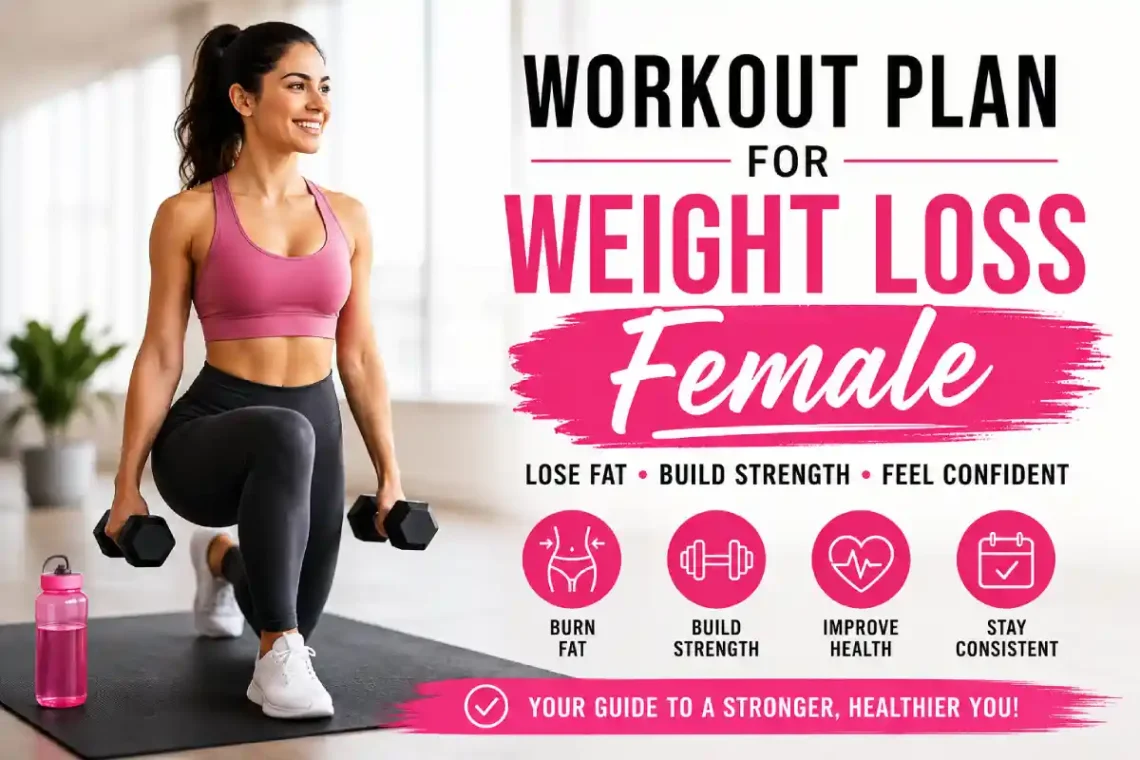
As you seek the optimal workout regimen to achieve your female weight loss ambitions, you may have already found numerous fitness plans promising rapid progress. Some may be advocating for constant cardio, others claim that strength training is the sole answer for fat burning. With such contradictory information on the web, feeling overwhelmed at the start is common.
According to numerous studies presented by top health & fitness establishments, published by the 2026 year ongoing, evidence backs a moderate & balanced combination of workout plans. Women can often achieve optimal fat burning and maintain results long-term by implementing strength training paired with regular cardio sessions, while remaining in a moderate calorie deficit, compared to other methods including exclusively diet, or exclusively cardio-focused workouts. Additionally strength training will maintain your muscle mass throughout your weight-loss journey- boosting metabolism.
Upon completing this workout program guide you’ll learn precisely how to create a personal fitness workout and routine for your physique that will burn unwanted body fat while simultaneously and efficiently building muscle while increasing overall health with little to no restrictive fad diet plans or diet fads.
❝
This article is a part of
Weight Loss Hub
What Is the Best Workout Plan for Female Weight Loss?
A weight-loss workout that not only incinerates body fat without losing lean musclemass, but can also improve healthand improve your health and fitness in the long term is known to be best workoutplan for females weightloss program. What this means is that you’re not going to be solely committed to one form of training, and will incorporate resistance training, cardiovascular conditioning, mobility workand recovery.
Most women think that they would benefit a lot from running for miles every single day on the tread mill, and while cardiovascular exercises really burn a ton of fat. They, however, are not really so suitable if you’re aiming towards a sleek as well as toned body. Resistance training, however, can keep the muscular tissue mass, increase you strength, and in order to build up that lean muscular tissue we really needed for that toned physical body you have desired.
A workout designed for female weightloss shouldn’t be so extreme as to not adhere to your lifestyle – is your daily schedule too hectic; so time consuming or very challenging to comply with if so; then your plan to weight loss won’t work.
For a time-efficient approach, a full-body workout for female weight loss can train multiple major muscle groups in the same session.
Key Components of an Effective Weight Loss Workout Plan
A balanced program should include the following elements:
- Strength Training
Whenever you lift weights or perform resistance training exercises, you push your muscles to try and get stronger and work to help your preserve lean muscle while you lose weight.
Adding strength training for female weight loss can help you build lean muscle while supporting overall fitness and making your workouts more effective.
Benefits include:
- Maintains muscle while losing fat
- Improves strength and posture
- Supports bone health
- Increases overall calorie expenditure
- Creates a leaner appearance
- Cardiovascular Exercise
It adds a cardiovascular workout to your routine that can increase calorie burned, and adds value to any strength training.
Popular cardio options include:
- Brisk walking
- Jogging
- Cycling
- Swimming
- Rowing
- Stair climbing
- Dance workouts
- Elliptical training
Between the medium pace cardio and the odd burst of HIIT, you’ll enhance your conditioning, and also keep yourself from getting bored.
- Daily Movement (NEAT)
The most underrated cause to aid weight loss is NEAT – or Non-Exercise Activity Thermogenesis. This accounts for all the calorie output derived from daily movements outside of your formal training:
- Walking
- Taking the stairs
- Cleaning the house
- Gardening
- Shopping
- Standing while working
Burning more of these “extra“ daily calorie would be wonderful, without having to commit to extra trips to the gym.
- Mobility and Flexibility
Stretching and mobility exercises are also important to your joint health, helping to provide better quality of movement while preventing any future injuries from being accrued.
Include:
- Dynamic warm-ups before workouts
- Static stretching after exercise
- Yoga or mobility sessions once or twice per week
- Recovery
It’s equally as important as going to the gym. During those rest periods your body repairs damaged muscles tissue, makes necessary adjustments to your muscles that help you get stronger at exercising, and makes it ready for your next session.
Prioritize:
- 7–9 hours of sleep each night
- Rest days
- Proper hydration
- Protein-rich meals
- Stress management
What Does an Ideal Weekly Routine Look Like?
While every woman has different goals and schedules, a balanced weekly plan often includes:
| Activity | Recommended Frequency |
| Strength Training | 3–4 days |
| Cardio | 2–3 days |
| Daily Walking | Every day |
| Mobility Work | 1–2 days |
| Full Rest Day | 1 day |
This combination provides enough training stimulus to promote fat loss while allowing adequate recovery.
If you prefer a structured routine, a 7-day workout plan for weight loss can help you organize cardio, strength training, recovery, and rest throughout the week.
Signs Your Workout Plan Is Working
Many people judge success only by the scale, but body weight doesn’t always reflect positive changes in body composition.
Other signs of progress include:
- Clothes fitting more comfortably
- Increased strength
- Better posture
- Improved stamina
- Higher energy levels
- Faster recovery after workouts
- Improved mood and confidence
- Better sleep quality
Tracking multiple indicators provides a more accurate picture of your progress.
Expert Tip
Instead of opting for a workout program based on which one can burn the most calories in one go, you should choose the program that you are more likely to stick with for the next 6 months. If you want to lose fat in the long run, in most of cases consistency will beat intensity.
How Weight Loss Workouts Actually Work
Most of the time, people often tend to confuse calorie-burning with fat-loss and believe that getting sweaty more leads to the loss of more fat. Some people might also believe that performing endless crunches will have a direct impact and reduce belly fat, but in reality, they fail to meet workout and physiology fundamentals.
To craft out a workout schedule that really works for fat loss, you need to get acquainted with how it happens.
Understanding Energy Balance
To fuel every day processes such as circulation, digestion, respiration, movement and all others. Energy in the form of calories is acquired from beverages and also from the foods consumed.
Your physical and physiological system reduces its energy in stores.
This includes stored fat whenever it receives more energy in the form of calories to sustain them or it has more stored energy in stores when your energy expenditure supersedes its energy supply. Therefore workout routines have a very important role for increased energy spending but this will be most rewarding when supported by healthy diet and overall health practices.
Fat Loss vs. Weight Loss
Many people use the terms fat loss and weight loss interchangeably, but they are not the same.
| Fat Loss | Weight Loss |
| Reduces body fat while preserving muscle | Includes loss of fat, muscle, and water |
| Improves body composition | Doesn’t always improve body composition |
| Supports long-term metabolic health | Rapid weight loss may be difficult to maintain |
| Focuses on sustainable habits | Often influenced by short-term changes like water balance |
For the majority of females, increasing and decreasing body composition (losing fat while retaining muscle) is a more conducive form of change than solely decreasing body weight.
Why Muscle Matters During Weight Loss
Unless you supplement your training program with resistance training and sufficient protein as you embark upon a calorie deficit, it’s conceivable you’ll be targeting muscle rather than fat for burning off excess calories.
Maintaining muscle is important because it:
- Supports strength and mobility
- Helps maintain metabolic health
- Improves physical function
- Creates a toned appearance
- Makes long-term weight maintenance easier
This is why combining strength training with sufficient dietary protein is recommended during weight loss.
Cardio vs Strength Training for Fat Loss
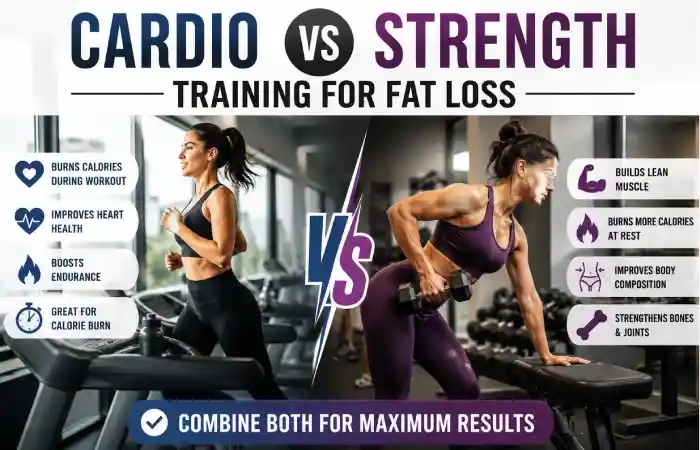
Should I be doing Cardio or Strength Training for weight loss? The most frequent question a woman will ask when she decides to start to pursue a more fit lifestyle is, “Which is going to help me burn more fat: cardio or strength training?” This really isn’t a question one over the other is the right or wrong answer; as both contribute in different ways to fat loss but at their own different times.
Cardio training directly burns more calories while you’re performing it than does strength training – at least at this particular moment – But in the end both Cardio and strength training workout are necessary; they just work in somewhat different way.
Together they form an absolute powerful fat busting duo, creating one of the most effective ways a person can lose fat. Rather than perceiving these exercises as being opposed, see strength training and cardio training as having two supporting roles in your arsenal of losing weight effectively over time.
How Cardio Supports Weight Loss
Some of the most effective cardio exercises for women include:
- Brisk walking
- Jogging
- Cycling
- Swimming
- Rowing
- Stair climbing
- Dance workouts
- Hiking
- Elliptical training
- Jump rope
Cardio is useful for building your heart health and endurance, in support of maintaining an active lifestyle.
Benefits of Cardio
- Burns calories efficiently
- Improves cardiovascular fitness
- Enhances endurance
- Reduces stress
- Supports better blood circulation
- Can be adapted for all fitness levels
Additionally, excessive cardio can lead to a risk of lean muscle loss while dieting and that’s when a balance is needed.
How Strength Training Supports Fat Loss
The process of training your muscles with some resistance through free weights, weight machines, resistance bands or even the use of your body weight are all regarded as strength training.
Some women are afraid of using free weights due to the fear that they would develop bulky muscles and gain weight as a result of training with weights. In truth the benefits of resistance training result in less body fat and the retention of lean muscle thereby giving the woman a toned and leaner look.
Benefits of Strength Training
- Helps maintain lean muscle during weight loss
- Improves overall strength
- Supports healthy bones and joints
- Enhances posture and balance
- Increases confidence in daily activities
- Improves body composition
HIIT vs Steady-State Cardio
High-Intensity Interval Training is defined as workouts that involve a period of high intensity followed by a rest period in intervals whereas Steady State Cardio is consistent output for a sustained period of time.
HIIT
Example:
- Sprint for 30 seconds
- Walk for 60 seconds
- Repeat for 15–20 minutes
Advantages
- Time-efficient
- Improves cardiovascular fitness
- Increases workout intensity
- Adds variety to your routine
Considerations
- Higher impact on joints
- Requires longer recovery
- Not ideal every day
Steady-State Cardio
Examples include:
- Walking
- Cycling
- Swimming
- Light jogging
Advantages
- Beginner-friendly
- Easier to recover from
- Lower injury risk
- Can be sustained for longer durations
If you enjoy higher-intensity exercise, a HIIT workout plan for female fat loss can add short bursts of challenging cardio to your weekly routine.
Cardio vs Strength Training Comparison
| Feature | Cardio | Strength Training |
| Calories burned during workout | ⭐⭐⭐⭐⭐ | ⭐⭐⭐ |
| Muscle preservation | ⭐⭐ | ⭐⭐⭐⭐⭐ |
| Improves strength | ⭐ | ⭐⭐⭐⭐⭐ |
| Improves endurance | ⭐⭐⭐⭐⭐ | ⭐⭐⭐ |
| Supports long-term body composition | ⭐⭐⭐ | ⭐⭐⭐⭐⭐ |
| Beginner-friendly | ⭐⭐⭐⭐⭐ | ⭐⭐⭐⭐ |
The Best Approach
Rather than choosing one over the other, aim for:
- Strength training: 3–4 days per week
- Daily walking or general movement
- One full recovery day
- Cardio: 2–3 days per week
This combination supports fat loss while maintaining muscle and improving overall fitness.
Weekly Workout Plan for Women
A structured plan also helps you eliminate any decision-making that can often get in the way of sticking to a workout regimen. This is a 7 day plan that hits on strength, cardio, and recovery to best suit a women whos main goal for their workouts is fat loss and strength.
7-Day Weight Loss Workout Schedule
| Day | Workout | Duration | Focus |
| Monday | Full-Body Strength | 45–60 min | Build muscle |
| Tuesday | Brisk Walk or Cycling | 30–45 min | Cardio |
| Wednesday | Lower Body + Core | 45–60 min | Legs & glutes |
| Thursday | Yoga or Mobility | 30 min | Recovery |
| Friday | Upper Body + HIIT | 45–60 min | Strength & conditioning |
| Saturday | Long Walk, Swimming, or Hiking | 45–60 min | Endurance |
| Sunday | Rest & Stretching | 20–30 min | Recovery |
This provides a structure with equal training and a rest period between workouts whilst also keeping you relatively active through-out the week.
Monday: Full-Body Strength Workout
Start the week with compound movements that work multiple muscle groups.
| Exercise | Sets | Reps |
| Goblet Squats | 3 | 12 |
| Dumbbell Bench Press | 3 | 10 |
| Bent-Over Rows | 3 | 12 |
| Romanian Deadlifts | 3 | 10 |
| Shoulder Press | 3 | 12 |
| Plank | 3 | 30–45 sec |
Tuesday: Cardio Day
Choose an activity you enjoy, such as:
- Brisk walking
- Cycling
- Swimming
- Rowing
- Elliptical training
Wednesday: Lower Body & Core
Strengthen your largest muscle groups to increase overall calorie expenditure.
| Exercise | Sets | Reps |
| Squats | 3 | 12 |
| Walking Lunges | 3 | 10 each leg |
| Hip Thrusts | 3 | 12 |
| Glute Bridges | 3 | 15 |
| Calf Raises | 3 | 15 |
| Bicycle Crunches | 3 | 20 |
Thursday: Recovery Day
Options include:
- Yoga
- Stretching
- Foam rolling
- Easy walking
- Light cycling
Friday: Upper Body + HIIT
Perform three sets of each exercise:
- Chest Press
- Lat Pulldown
- Dumbbell Shoulder Press
- Seated Cable Row
- Triceps Pushdown
- Biceps Curl
Finish with 10–15 minutes of HIIT, alternating 30 seconds of fast effort with 60 seconds of recovery.
Saturday: Longer Cardio Session
Choose one enjoyable activity:
- Hiking
- Swimming
- Dance fitness
- Power walking
- Cycling
Sunday: Rest and Prepare
Use this day to:
- Stretch
- Hydrate
- Sleep well
- Prepare healthy meals
- Plan your workouts for the coming week
Planning ahead reduces the chances of missing workouts during busy weekdays.
Weekly Training Volume Guide
| Goal | Strength Days | Cardio Days | Daily Steps |
| Beginner | 3 | 2 | 7,000–8,000 |
| Fat Loss | 4 | 3 | 8,000–10,000 |
| Advanced | 5 | 3–4 | 10,000–12,000 |
Remember that these numbers are general recommendations. Adjust them based on your fitness level, recovery, and schedule.
Beginner vs Intermediate Workout Plans
Your workout routine should evolve as you become stronger and more confident. Progressing gradually helps prevent plateaus and keeps your body adapting to new challenges.
Beginner Workout Plan
If you’re new to exercise or returning after a long break, start with a manageable routine that emphasizes proper form and consistency.
Weekly Structure
- Strength training: 3 days
- Cardio: 2 days
- Walking: Daily
- Rest: 2 days
Focus on learning movement patterns before increasing weights or workout intensity.
Intermediate Workout Plan
After several months of consistent training, you may be ready for a more challenging routine.
Weekly Structure
- Strength training: 4–5 days
- Cardio: 2–3 days
- HIIT: 1–2 sessions
- Daily movement
- 1 recovery day
Intermediate trainees can gradually increase training volume by adding sets, weight, or exercise variations.
Beginner vs Intermediate Comparison
| Feature | Beginner | Intermediate |
| Workout Days | 3–4 | 5–6 |
| Workout Length | 35–45 min | 60–75 min |
| Sets | 2–3 | 3–5 |
| Reps | 10–12 | 8–15 |
| Rest Between Sets | 60–90 sec | 30–75 sec |
| Focus | Technique | Progressive overload |
When Should You Progress?
You’re likely ready to move to an intermediate routine when:
- Your current workouts feel easy.
- You recover quickly after sessions.
- You can complete all prescribed reps with good form.
- You’ve trained consistently for several months.
- You’re confident using free weights or gym equipment.
Increase your training gradually to avoid overtraining and reduce injury risk. Small improvements each week—such as lifting slightly heavier weights or completing an extra repetition—can lead to significant progress over time.
Home vs Gym Workouts
One of the first decisions many women face when starting a fitness journey is whether to work out at home or join a gym. The good news is that both options can help you lose weight effectively. Fat loss depends more on your consistency, workout quality, and nutrition than on where you exercise.
The ideal choice comes down to your lifestyle, budget, available equipment, and personal preferences. Some women thrive in the motivating atmosphere of a gym, while others prefer the convenience and privacy of exercising at home. Instead of asking which option is objectively better, ask yourself which environment will help you stay consistent for the next six months.
Remember, the best workout is the one you’ll actually do regularly.
Benefits of Home Workouts
Home workouts have become increasingly popular because they remove many common barriers to exercise, such as commuting, crowded gyms, or expensive memberships.
Advantages
- Exercise whenever your schedule allows
- No commuting time
- Lower long-term costs
- Greater privacy
- Beginner-friendly environment
- Easy to fit into a busy lifestyle
Many effective bodyweight exercises require little to no equipment, making home workouts an excellent starting point for beginners.
You don’t need a gym to get started. A home workout plan for female weight loss can combine bodyweight exercises, simple cardio, and progressive training with minimal equipment.
Challenges of Home Workouts
Although convenient, home workouts also have limitations.
Some common challenges include:
- Limited equipment for progressive overload
- Household distractions
- Less accountability
- Reduced exercise variety
- Limited access to professional coaching
Fortunately, many of these challenges can be overcome by creating a dedicated workout space and following a structured training plan.
Essential Home Workout Equipment
You don’t need an expensive home gym to achieve excellent results.
Consider investing in:
| Equipment | Why It’s Useful |
| Resistance Bands | Affordable and versatile for full-body workouts |
| Adjustable Dumbbells | Allow progressive strength training |
| Yoga Mat | Improves comfort for floor exercises |
| Kettlebell | Great for functional strength and conditioning |
| Step Platform | Useful for cardio and lower-body exercises |
| Stability Ball | Supports core and mobility work |
| Jump Rope | Simple, effective cardio tool |
Start with the basics and gradually expand your equipment as your fitness level improves.
Sample Home Workout
Perform this routine 2–3 times per week.
| Exercise | Sets | Reps |
| Bodyweight Squats | 3 | 15 |
| Push-ups (Modified if Needed) | 3 | 10 |
| Resistance Band Rows | 3 | 15 |
| Glute Bridges | 3 | 15 |
| Reverse Lunges | 3 | 10 each leg |
| Mountain Climbers | 3 | 20 |
| Plank | 3 | 40 seconds |
Rest for 60–90 seconds between sets.
As you become stronger, increase resistance, repetitions, or sets to continue progressing.
Benefits of Gym Workouts
A gym provides access to a wider range of equipment, making it easier to progressively challenge your muscles.
For women looking to build strength while losing fat, gym equipment offers more exercise variety and opportunities for progression.
Advantages
- Greater equipment selection
- Easier progressive overload
- Professional trainers available
- Motivating environment
- Structured workout atmosphere
- Better options for heavy strength training
Many gyms also offer group fitness classes, which can increase motivation and make workouts more enjoyable.
Sample Gym Workout
| Exercise | Sets | Reps |
| Barbell Squat | 3 | 10 |
| Leg Press | 3 | 12 |
| Dumbbell Bench Press | 3 | 10 |
| Lat Pulldown | 3 | 12 |
| Seated Cable Row | 3 | 12 |
| Walking Lunges | 3 | 12 |
| Incline Treadmill Walk | 20 minutes | Moderate pace |
Focus on proper technique before increasing weight.
Home vs Gym Comparison
| Feature | Home | Gym |
| Cost | ⭐⭐⭐⭐⭐ | ⭐⭐⭐ |
| Convenience | ⭐⭐⭐⭐⭐ | ⭐⭐⭐ |
| Equipment Variety | ⭐⭐ | ⭐⭐⭐⭐⭐ |
| Progressive Overload | ⭐⭐⭐ | ⭐⭐⭐⭐⭐ |
| Privacy | ⭐⭐⭐⭐⭐ | ⭐⭐⭐ |
| Motivation | ⭐⭐⭐ | ⭐⭐⭐⭐ |
| Professional Guidance | ⭐ | ⭐⭐⭐⭐⭐ |
| Best for Beginners | ⭐⭐⭐⭐⭐ | ⭐⭐⭐⭐ |
Which One Should You Choose?
Choose home workouts if you:
- Have a busy schedule
- Prefer privacy
- Want to save money
- Enjoy flexible workouts
Choose a gym if you:
- Want access to more equipment
- Enjoy a motivating environment
- Like structured training
- Plan to build significant strength
Both options are equally capable of producing excellent results when paired with consistency and good nutrition.
Expert Tip
Don’t delay your fitness journey while deciding between home and gym workouts. Starting with bodyweight exercises at home today is far more beneficial than waiting weeks for the “perfect” gym membership. (ACSM)
Nutrition Tips to Support Weight Loss
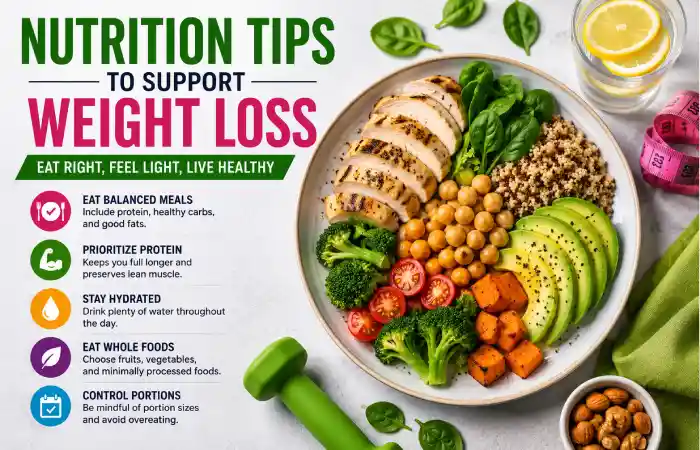
Exercise creates the stimulus for change, but nutrition provides the fuel that determines how effectively your body responds. You cannot out-train an unhealthy diet, which is why combining regular exercise with balanced eating habits is essential for sustainable fat loss.
Instead of following restrictive diets or eliminating entire food groups, focus on creating eating habits that you can maintain long term.
Create a Moderate Calorie Deficit
Weight loss occurs when you consistently consume fewer calories than your body uses. However, eating too little can reduce energy levels, impair recovery, and make it harder to stick with your plan.
A moderate calorie deficit is generally more sustainable than an extreme one because it supports fat loss while helping preserve muscle and workout performance.
Avoid crash diets that promise rapid results, as they are often difficult to maintain and may lead to muscle loss or weight regain.
Prioritize Protein
Protein plays a crucial role during weight loss because it supports muscle maintenance, recovery, and satiety.
Good protein sources include:
- Eggs
- Chicken breast
- Fish
- Greek yogurt
- Cottage cheese
- Tofu
- Lentils
- Beans
- Milk
- Whey protein (if needed)
Try to include a quality protein source with every main meal.
Choose Quality Carbohydrates
Carbohydrates provide energy for your workouts and daily activities. Rather than avoiding carbs completely, choose minimally processed options rich in fiber and nutrients.
Healthy carbohydrate sources include:
- Oats
- Brown rice
- Sweet potatoes
- Whole-grain bread
- Quinoa
- Fruits
- Vegetables
- Beans
Eating carbohydrates around workouts may also help support training performance and recovery.
Include Healthy Fats
Healthy fats support hormone production, brain function, and overall health.
Nutritious fat sources include:
- Avocados
- Nuts
- Seeds
- Olive oil
- Fatty fish
- Natural peanut butter
Because fats are calorie-dense, portion control is important.
Stay Hydrated
Hydration affects workout performance, recovery, and overall well-being.
Drink water consistently throughout the day, especially:
- Before workouts
- During longer training sessions
- After exercise
- In hot weather
A reusable water bottle can make it easier to stay hydrated.
Pre-Workout Nutrition
Eating a balanced meal 2–3 hours before exercise can provide energy for your workout.
Example:
- Oatmeal with banana and Greek yogurt
- Whole-grain toast with eggs
- Brown rice with grilled chicken
If you’re training early in the morning, a lighter snack such as a banana or yogurt may be sufficient.
Post-Workout Nutrition
After exercise, focus on replenishing energy stores and supporting muscle recovery.
Good options include:
- Protein smoothie
- Greek yogurt with fruit
- Chicken and rice
- Cottage cheese with berries
- Tuna sandwich on whole-grain bread
Aim to consume a balanced meal or snack within a couple of hours after training.
Sample One-Day Weight Loss Meal Plan
| Meal | Example |
| Breakfast | Vegetable omelet with whole-grain toast |
| Morning Snack | Greek yogurt with berries |
| Lunch | Grilled chicken, brown rice, mixed vegetables |
| Afternoon Snack | Apple with almonds |
| Dinner | Baked salmon, quinoa, broccoli |
| Evening Snack (Optional) | Cottage cheese or a protein smoothie |
This sample emphasizes balanced meals, lean protein, fiber-rich carbohydrates, and healthy fats.
Nutrition Mistakes That Can Slow Progress
Many women unknowingly make dietary mistakes that affect their results.
Common examples include:
- Skipping meals
- Drinking sugary beverages regularly
- Eating too little protein
- Relying on highly processed snacks
- Ignoring portion sizes
- Emotional eating due to stress
- Frequently eating out without planning
Awareness of these habits is the first step toward making healthier choices.
2026 Evidence-Based Habits Comparison
| Habit | Impact on Weight Loss | Difficulty to Maintain |
| Strength Training | Very High | Moderate |
| High-Protein Diet | Very High | Easy |
| Daily Walking | High | Easy |
| Meal Planning | High | Moderate |
| Drinking Enough Water | Moderate | Easy |
| 7–9 Hours of Sleep | High | Moderate |
| Consistent Workout Schedule | Very High | Moderate |
The greatest long-term success usually comes from combining several healthy habits rather than relying on a single strategy.
Common Workout Mistakes That Slow Progress
Following a workout plan consistently is a major achievement, but even dedicated women can unknowingly make mistakes that limit their results. These mistakes don’t always stop progress immediately, but over weeks or months they can lead to plateaus, frustration, or even injuries.
The good news is that most of these issues are easy to correct once you recognize them. By focusing on smart training habits instead of quick fixes, you’ll continue making steady progress toward your weight-loss goals.
-
Doing Too Much Cardio
Many women believe spending hours on a treadmill is the fastest way to lose weight. While cardio certainly helps burn calories, excessive cardio without strength training can reduce muscle mass during a calorie deficit.
Muscle plays an important role in maintaining a healthy metabolism and creating a toned appearance. Replacing some long cardio sessions with resistance training often leads to better long-term results.
Better approach:
- Strength train 3–4 days weekly
- Perform cardio 2–3 times weekly
- Stay active throughout the day with walking
-
Ignoring Progressive Overload
Your body adapts to exercise over time. If you lift the same weights or perform the same workout every week, progress eventually slows.
To keep improving, gradually increase the challenge by:
- Lifting slightly heavier weights
- Adding more repetitions
- Performing an additional set
- Improving exercise technique
- Reducing rest periods (when appropriate)
Small improvements made consistently produce significant long-term results.
-
Skipping Warm-Ups
Many people jump directly into heavy exercises without preparing their muscles and joints.
A proper warm-up helps:
- Increase blood flow
- Improve mobility
- Activate muscles
- Reduce injury risk
- Improve workout performance
Spend 5–10 minutes warming up before every session.
-
Poor Exercise Technique
Using incorrect form often reduces exercise effectiveness while increasing injury risk.
If you’re unsure about a movement:
- Start with lighter weights
- Practice slowly
- Watch instructional videos from qualified professionals
- Ask a certified trainer for guidance if available
Mastering technique before increasing weight leads to safer and faster progress.
-
Neglecting Recovery
Your muscles don’t become stronger during workouts—they recover and adapt afterward.
Without adequate recovery, you may experience:
- Constant soreness
- Fatigue
- Reduced strength
- Poor motivation
- Increased injury risk
Support recovery by prioritizing sleep, hydration, balanced nutrition, and rest days.
-
Expecting Immediate Results
Healthy fat loss takes time. Many women become discouraged if they don’t notice visible changes after just a few weeks.
Instead of expecting overnight transformation, focus on:
- Weekly consistency
- Better nutrition
- Stronger workouts
- Improved energy
- Sustainable habits
The results will follow.
-
Comparing Yourself to Others
Everyone has different genetics, fitness backgrounds, schedules, and body types.
Instead of comparing yourself on social media, compare yourself to where you were last month.
Progress is personal.
-
Following Every New Fitness Trend
One week it’s detox teas. The next week it’s a viral workout challenge.
Constantly switching programs prevents consistent progress.
Choose a structured plan and follow it for at least 8–12 weeks before making major changes.
-
Ignoring Daily Activity
Many women exercise for one hour but remain sedentary for the rest of the day.
Increasing everyday movement—such as walking, taking the stairs, or standing more often—can meaningfully increase your total daily calorie expenditure.
-
Treating Exercise as Punishment
Workouts shouldn’t be viewed as a way to “earn” food or punish yourself for eating.
Instead, think of exercise as an investment in:
- Better health
- Increased strength
- Improved confidence
- More energy
- Greater independence later in life
This mindset is much easier to maintain long term.
Troubleshooting Common Challenges
Even with a good workout plan, it’s normal to encounter obstacles. Here’s how to address some of the most common issues.
| Challenge | Possible Cause | Solution |
| Weight loss has stalled | Calorie intake now matches energy expenditure | Review portion sizes, increase daily steps, or slightly adjust workout intensity |
| Constant fatigue | Too much training or poor sleep | Schedule recovery days and aim for 7–9 hours of sleep |
| Always hungry | Meals lack protein or fiber | Add lean protein, vegetables, and whole grains to meals |
| Sore for several days | Recovery isn’t adequate | Reduce workout intensity temporarily and focus on hydration and mobility |
| Low motivation | Goals feel too large | Set smaller weekly targets and celebrate progress |
| No strength gains | No progressive overload | Increase weights or repetitions gradually |
| Frequent workout skips | Poor planning | Schedule workouts like appointments and prepare gym clothes in advance |
The key is to identify the cause rather than assuming your plan isn’t working.
How to Stay Consistent and Motivated
Motivation often fades after the excitement of starting a new fitness routine. That’s completely normal. Long-term success depends more on building habits than on feeling motivated every day.
The women who achieve lasting results aren’t necessarily the most motivated—they’re the most consistent.
Set SMART Goals
Instead of vague goals like “I want to lose weight,” create goals that are:
- Specific
- Measurable
- Achievable
- Relevant
- Time-bound
Example:
“I will complete four workouts each week for the next eight weeks and average 8,000 steps per day.”
Clear goals provide direction and make it easier to measure progress.
Track More Than Your Weight
The scale doesn’t always reflect positive changes in body composition. Instead, monitor several indicators of progress.
Track:
- Waist, hips, and thigh measurements
- Progress photos every four weeks
- Strength improvements
- Energy levels
- Sleep quality
- Workout consistency
- Daily step count
Many women notice improvements in these areas before significant changes on the scale.
Women over 40 may benefit from a more tailored approach, so a weight loss workout plan for women over 40 can emphasize strength, mobility, recovery, and sustainable progression.
Build Habits Into Your Daily Routine
One of the easiest ways to stay consistent is to make workouts part of your existing schedule.
Examples include:
- Exercising immediately after work
- Walking after dinner
- Preparing meals every Sunday
- Keeping workout clothes ready the night before
The fewer decisions you have to make each day, the easier it becomes to stay on track.
Find a Workout You Enjoy
Not everyone enjoys running or lifting weights, and that’s okay.
You can stay active through:
- Dance workouts
- Swimming
- Hiking
- Cycling
- Pilates
- Yoga
- Group fitness classes
- Recreational sports
The best workout is one you’ll continue doing consistently.
Celebrate Small Wins
Weight loss is only one measure of success.
Celebrate achievements such as:
- Completing all scheduled workouts
- Lifting heavier weights
- Walking farther without fatigue
- Sleeping better
- Choosing healthier meals
- Feeling more confident
These milestones reinforce positive habits and help maintain motivation.
Stay Flexible
Life will occasionally disrupt your routine due to work, family responsibilities, travel, or illness.
Missing one workout doesn’t erase your progress. Simply return to your routine at the next opportunity instead of waiting for the “perfect” Monday to start again.
Monthly Progress Checklist
Use this checklist at the end of each month:
| Question | Yes | No |
| Did I complete at least 80% of my planned workouts? | ☐ | ☐ |
| Am I stronger than last month? | ☐ | ☐ |
| Have my energy levels improved? | ☐ | ☐ |
| Am I sleeping 7–9 hours most nights? | ☐ | ☐ |
| Did I maintain healthy eating habits most days? | ☐ | ☐ |
| Have I increased my daily activity? | ☐ | ☐ |
If you answer “Yes” to most questions, you’re making meaningful progress—even if the scale hasn’t changed dramatically.
Frequently Asked Questions
What is the best workout plan for weight loss for women?
A balanced plan that combines strength training, cardio, daily movement, and proper nutrition is generally the most effective for sustainable fat loss.
Can women lose weight without going to the gym?
Yes. Home workouts using bodyweight exercises, resistance bands, or dumbbells can be highly effective when paired with a balanced diet and consistent routine.
Is strength training better than cardio for weight loss?
Strength training and cardio serve different purposes. Strength training helps preserve muscle and improve body composition, while cardio increases calorie expenditure and cardiovascular fitness. Combining both often produces the best results.
How many days a week should I exercise?
Aim for 4–5 active days per week, including strength training, cardio, and recovery sessions.
How long should each workout last?
Most effective workouts last between 45 and 60 minutes, depending on your goals and fitness level.
Can I lose belly fat with specific exercises?
No. Spot reduction is not supported by scientific evidence. Overall fat loss through nutrition, strength training, and cardio is the most effective approach.
Is walking enough to lose weight?
Walking contributes to calorie expenditure and improves overall health. Combining walking with resistance training and balanced nutrition generally leads to better long-term results.
Should beginners lift weights?
Absolutely. Starting with light weights and proper technique helps build strength, improve confidence, and support healthy body composition.
Do I need supplements to lose weight?
No. Most women can meet their nutritional needs through a balanced diet. Supplements may be helpful in some situations but should never replace healthy eating habits.
How much protein should I eat?
Protein needs vary depending on age, body weight, activity level, and goals. Including a protein source with each meal can support muscle maintenance and recovery during weight loss.
Is it okay to work out every day?
Daily movement is beneficial, but high-intensity training every day may not allow enough recovery. Include lighter activity or rest days throughout the week.
Why isn’t the scale changing?
Weight can fluctuate due to hydration, hormones, digestion, and muscle gain. Track body measurements, strength, clothing fit, and progress photos in addition to body weight.
Should I do cardio before or after lifting weights?
If fat loss and strength are your priorities, many people prefer completing strength training first while energy levels are highest, followed by cardio. However, the best order depends on your primary goal and personal preference.
What should I eat before a workout?
Choose a balanced meal or snack containing carbohydrates for energy and some protein for muscle support. Examples include oatmeal with yogurt, fruit with peanut butter, or whole-grain toast with eggs.
How long does it take to see results?
While individual results vary, many women notice improvements in energy, strength, and endurance within a few weeks. Visible body composition changes usually require several weeks or months of consistent exercise and nutrition.
Final Thoughts
Starting a workout plan for weight loss is about much more than changing your appearance—it’s about building a stronger, healthier, and more confident version of yourself. Every workout you complete, every nutritious meal you choose, and every healthy habit you develop contributes to long-term success.
Remember that there is no perfect routine that works for everyone. The best workout plan is the one that fits your lifestyle, challenges you appropriately, and is realistic enough to follow consistently. Focus on gradual progress instead of perfection, and don’t let occasional setbacks discourage you.
As your strength improves and healthy habits become part of your daily routine, you’ll likely notice benefits that extend far beyond the scale. Better energy, improved mood, increased confidence, enhanced mobility, and greater overall well-being are all signs that your efforts are paying off.
Stay patient, trust the process, and remember that sustainable weight loss is a journey—not a race. With the right combination of strength training, cardio, balanced nutrition, recovery, and consistency, you can achieve lasting results while building habits that support your health for years to come.
Afiya Jafar is a fitness and wellness writer who focuses on making health, exercise, and healthy lifestyle information simple and practical. Her work covers workouts, fitness motivation, strength training, nutrition, weight management, stress management, mindfulness, and everyday wellness.
Read Full Bio of Afiya Jafar →
Sameena Begum reviews selected health, wellness, fitness, and digital content for clarity, factual presentation, consistency, and reader usefulness. Her review work helps maintain clear and responsible editorial standards across PhysicalFitt content.
Read Full Bio of Sameena Begum →
Dr. Khizrana Begum is a qualified medical professional with MBBS and MD qualifications and 5+ years of experience in the medical field. She works as a General Physician and Dermatologist, with expertise in general medicine, dermatology, preventive healthcare, and skin health.
Read Full Bio of Dr. Khizrana Begum →