
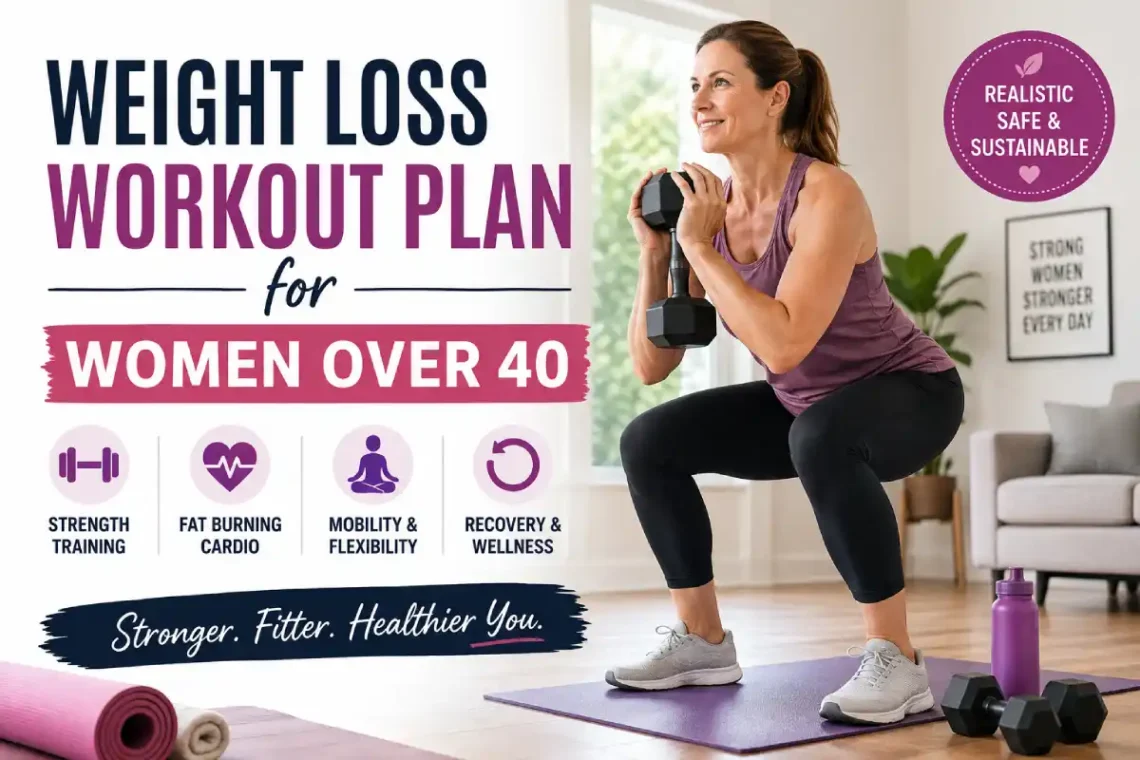
For weight loss after 40, a weight loss training regimen can do so much more than just burned calories. When combined, Strength Training, cardio, mobility, and recovery are usually what’s needed for muscle upkeep, maintaining bones strong, staying fit and keeping body fat OFF for good.
Fat is accumulated post-40 with effects from hormonal and the aging, from sleep, stress, and exercise change – but this does not have to guarantee unwanted weight gain, as seen in a 2016 Mayo Clinic notice where we weight may put on weight at much higher rates in perimenopause andopause, and finding it harder to lose body weight due to decreased in muscle mass and sedentary lifestyle. By both cardio training and weight training, there will be changes with your body in no time and effectively manage weight over 40’s.
A sustainable routine starts with a balanced workout plan for female weight loss that combines strength training, cardio, mobility, and adequate recovery.
❝
This article is a part of
Weight Loss Hub
Hormonal Changes and Weight Loss
As you approach and navigate perimenopause and menopause, where the body decides to hold fat can be impacted, leading to more fat buildup in the belly.
Hormones are not entirely to blame, though, since body weight also includes age, decreasing muscle mass, and your level of everyday physical activity, plus poor sleeping habits, food consumption habits, stress, and genes can all affect your scale.
That’s why you can’t rely on endless hours of cardio and restrictive “crash” diets. It’s also crucial to engage in muscle-preserving weight-training, modest cardio exercise, everyday physical movement, and lots of recover.
What changes after 40?
| Factor | What Can Change | Smart Response |
| Muscle mass | May gradually decline with age | Strength train 2–3 times weekly |
| Fat distribution | More abdominal fat may occur around menopause | Combine exercise with nutrition habits |
| Bone health | Bone loss becomes increasingly important | Resistance and weight-bearing exercise |
| Recovery | Some women notice greater fatigue | Schedule rest and vary intensity |
| Mobility | Stiffness may become more noticeable | Add mobility and stretching |
| Sleep | Menopause symptoms can disrupt sleep | Prioritize recovery and consistent routines |
The point is, not every session has to be low impact! The best approach in menopause is often having workouts you can recover from and balancing some more challenging types with easier ones.
For women who enjoy higher-intensity cardio, a HIIT workout plan for female fat loss can be incorporated alongside strength and lower-impact training.
Safe Exercise Routine
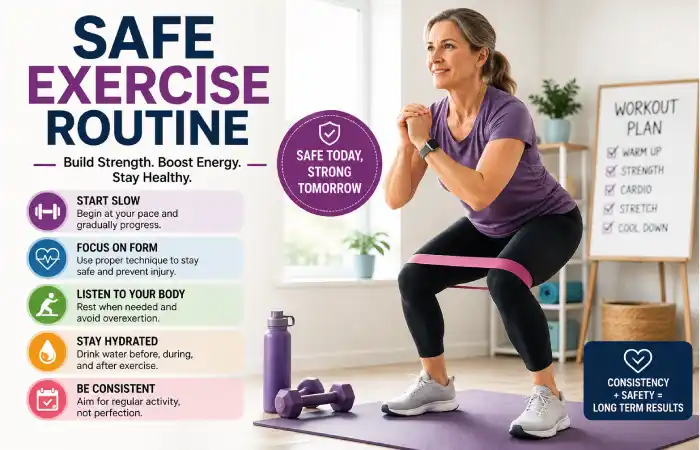
If you are using physical activity guidelines for menopause you will also find this sentence: Try for between 150 to 300 minutes per week of moderate activity, or 75 to 150 minutes of vigorous exercise and strength training 2 or more days per week.
Gym access isn’t essential. A home workout plan for female weight loss can use bodyweight exercises, resistance bands, or dumbbells to build a consistent routine.
You don’t need to begin at the upper end.
Beginner-friendly weekly workout plan
| Time | Day | Workout |
| 30–40 min | Monday | Full-body strength |
| 30–45 min | Tuesday | Brisk walking + mobility |
| 30–40 min | Wednesday | Full-body strength |
| 25–40 min | Thursday | Easy cardio or active recovery |
| 30–40 min | Friday | Full-body strength + core |
| 40–60 min | Saturday | Longer walk, cycling or swimming |
| 10–20 min | Sunday | Rest + gentle stretching |
If you’re completely new to exercise, start with shorter sessions and gradually increase duration.
When your schedule is busy, a full-body workout for female weight loss can train multiple major muscle groups in a single session.
If you prefer a structured schedule, this 7-day workout plan for female weight loss can help you organize training, active recovery, and rest across the week.
A simple 2026 activity target
Moderate cardio: 150–300 min/week
Strength training: 2–3 sessions/week
Mobility: 5–10 minutes most days
Complete rest: At least 1 day when needed
You can divide cardio into smaller sessions. A 20-minute walk today is more useful than waiting for the perfect 60-minute workout.
Strength Training Focus
Resistance training-including workouts with bodyweight, free weights, and machines-has to be the most important aspect of a fat loss workout for women over 40. (Not that cardio can’t support a fat loss workout routine for women, but the older we get the more benefits there are to hanging on to muscle mass.)
Strength training becomes particularly valuable as you get older, so incorporating strength training for female weight loss can support muscle strength and overall fitness.
In fact, in a 2021 meta-analysis that examined exercise’s impact across 101 studies that involved nearly 5,700 postmenopausal women, Researchers saw improvements in muscle health as well as reductions in fat mass, percentage of body fat, Waist circumference and the visceral fat that lies under the abdomen. Aerobic and combined training showed stronger effects for some fat-mass outcomes, while resistance and combined training were particularly useful for muscle outcomes.
A 2025 systematic review and meta-analysis also found evidence supporting resistance training for bone mineral density in postmenopausal women. (HHS)
Best exercises to start with
Choose 5–7 movements covering the whole body:
- Chair or goblet squats
- Glute bridges
- Romanian deadlifts
- Step-ups
- Wall or incline push-ups
- Resistance-band or dumbbell rows
- Dumbbell shoulder presses
- Farmer carries
- Dead bugs or modified planks
Begin with a resistance heavy enough that you are capable of form with controlled motion; as you improve, progressively add reps, resistance, and/or volume.
Ex: If 2 sets of 8-12 are your goal, once that is done cleanly, begin by slightly bumping up the resistance of the exercise, then work in adding more reps to each set, then maybe more sets to make up 2 or even 3 sets total in good form.
The progressive overload is a more beneficial tool than simply trying to exhaust your clients at every workout.
Mobility and Flexibility
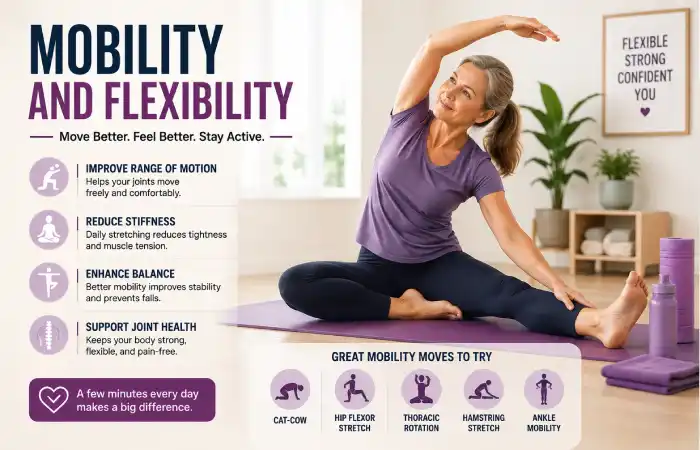
Another overlooked area when weight loss is the goal is mobility. It feels good to move and be pain-free which will motivate you to stay on the move. After workout and rest days, take 5-10 mins to perform slow, dynamic movements. Try the following:
- Hip circles
- Cat-cow
- Thoracic rotations
- Ankle mobility drills
- Hamstring stretches
- Chest-opening stretches
- Calf stretches
Other exercises that can accompany weight training include walking, Pilates, yoga, and balance exercises. The NHS suggests that during menopause, it is recommended to engage in weight-bearing exercise as well as resistance training regularly to ensure a person’s bones are strong.
Recovery Tips
It is important not to simply increase exercise, with rest especially crucial to deal with the demands of a workout program combined with work, family, and other day-to-day stress. Important factors include:
Adequate Sleep: This involves keeping regular bedtimes where ever possible
Rest Days: This requires listen to your body – not exercising as intensely where it is felt the body has a heavier level of fatigue
Protein Rich Meals: Ingest 2 or more of any: eggs,dairy, fish, lean meat, soy, beans/lentils etc
Hydration: Drink Water regularly during the day and around workouts
Daily Activity: Walking and activities performed outside of traditional training can supplement the regime;
The Mayo clinic 2026 guidelines additionally suggest sleep, food, lifestyle choices and activity level all need to feature heavily in tackling menopause weight gain.
Troubleshooting: What if you’re not losing weight?
If your weight isn’t changing after several weeks, don’t immediately double your workout volume.
Check:
- Are you strength training consistently?
- Are you getting enough everyday movement?
- Are portions and calorie-dense foods creeping upward?
- Are you sleeping adequately?
- Are you recovering between workouts?
- Are you measuring progress beyond the scale?
Track waist measurements, strength, walking endurance, energy, clothing fit, and workout consistency as well.
Remember that body composition can improve even when scale weight changes slowly.
FAQs
What is the best workout for women over 40 to lose weight?
Best workout to lose weight for women over 40: Both strength training and cardiovascular training are most beneficial to you than anything. Go for at least 2x strength training classes per week, and then you’re striving for at least 150-300 minutes of moderate-to vigorous- intensity physical activity per week.
Can a woman over 40 lose belly fat?
After age 40 yes, women can lose body fat overall, but you aren’t going to burn fat solely from your tummy region.
Instead, a regimen of diet with cardio, resistance, sleep, and activity is more beneficial than a million crunchs.
How many days per week should a woman over 40 be active?
3-5 days per week, depending on activity level and the individual’s recovery rate: “As a beginner or if recovering from injury, start out on 3 days each week and ramp up to activity most days of the week.
Is strength better than cardio after 40?
One isn’t required to replace the other “Strength training will ensure your muscle will stay there, while your cardio should encourage healthy hearts,” Dr.
Will a woman need gym memberships for any of those workout styles?
The workouts in the training plan are perfect for getting started with bodyweight or even adjustable dumbbells, exercise bands and walking. “You really don’t need an expensive gym to get fit at any age.”
Final Takeaway
The best Weight Loss Workout Plan for Women Over 40 won’t involve the hardest program on earth. Instead, it’s the one that will get you stronger, make it easy for you to keep up with regular exercise, and allow you to fully recover from your workouts to prevent injuries and to have long-term sustainability. Your week should involve 2-3 sessions of strength training, a variety of moderate cardio, daily stretching and good recovery time.
Do what the young body hasn’t figured out yet-adjust workouts that have come too far with your athletic endeavours to your abilities.
After all, you’re not aiming to have the body of a twenty-year-old, but rather a stronger, healthier body at over forty. And this is a healthier, more intelligent place from which to work.

Sameena Begum
Sameena Begum has a broad interest in technology, beauty, health, fitness, wellness, lifestyle, and consumer topics. She values clear, accurate, and practical information and pays close attention to details, readability, and relevance.
Read full bio of Sameena Begum
Afiya Jafar
Afiya Jafar is a fitness and wellness writer who focuses on making health, exercise, and healthy lifestyle information simple and practical. Her work covers workouts, fitness motivation, strength training, nutrition, weight management, stress management, mindfulness, and everyday wellness.
Read full bio of Afiya Jafar