
 Afiya Jafar
Fitness & Wellness Writer
Afiya Jafar is a fitness and wellness writer who focuses on making health, exercise, and healthy lifestyle information simple and practical.
Read Full Bio of Author →
Afiya Jafar
Fitness & Wellness Writer
Afiya Jafar is a fitness and wellness writer who focuses on making health, exercise, and healthy lifestyle information simple and practical.
Read Full Bio of Author →
 Sameena Begum
Health, Fitness & Digital Content Reviewer
Sameena reviews selected health, wellness, fitness, and digital content for clarity, factual presentation, and reader usefulness.
Read Full Bio of Reviewer →
Sameena Begum
Health, Fitness & Digital Content Reviewer
Sameena reviews selected health, wellness, fitness, and digital content for clarity, factual presentation, and reader usefulness.
Read Full Bio of Reviewer →
 Dr. Khizrana Begum
General Physician & Dermatologist
Dr. Khizrana Begum is a General Physician and Dermatologist with MBBS and MD qualifications and 5+ years of experience in the medical field.
Read Full Bio of Medical Reviewer →
Dr. Khizrana Begum
General Physician & Dermatologist
Dr. Khizrana Begum is a General Physician and Dermatologist with MBBS and MD qualifications and 5+ years of experience in the medical field.
Read Full Bio of Medical Reviewer →
7-Day Workout Plan for Weight Loss Female
Committing to a 7-day exercise plan is perhaps the easiest thing you can do to get a routine in place, support your overall fitness, and set the foundation for successful sustainable weight loss. We get it, lots of people think beating themselves up each and every day is the key to get-rich-quick weight loss but study after study have proven that the most holistic way to get rid of the fat will always be found with a combination of weight training, cardio, mobility work and active recovery.
Whatever you consider yourself – newbie, out of commission, or looking for some serious motivation, here is a way that has become a solid favorite – calorie burning exercises that protect muscles and ward off nasty injuries. Forget the latest, all-in, don’t eat for a week and do… that challenge thing; what we have here is just a practical 7-day workout you can do, easily and at home (or even in the gym).
Just supplement this with some good healthy food, sleep and drinking water and you are good to go.
❝
This article is a part of
Weight Loss Hub
Who Should Follow a 7-Day Plan?
The key to creating a consistent weekly exercise routine is it’s not about going all out every single day. It’s more so about just moving your body in some way and varying the level of activity so it gets an adequate amount of recovery time.
This plan is ideal for:
- Beginners starting their fitness journey
- Women looking to lose weight safely
- Busy professionals who need a structured routine
- Individuals returning after a long break
- Anyone wanting to improve overall health and fitness
It’s probably not applicable for individuals recovering from a major injury or chronic condition unless advised by a doctor; although doing so has other significant benefits.
If you’re over 40, your training needs may be different, making a workout plan for women over 40 a useful resource for adjusting intensity, recovery, strength work, and exercise selection.
Is This Plan Right for You?
| Why | Fitness Level | Recommended |
| Builds healthy exercise habits gradually | Beginner | ✅ Yes |
| Improves consistency and endurance | Intermediate | ✅ Yes |
| Increase intensity or resistance | Advanced | ✅ With modifications |
| Lower-impact exercises improve mobility | Seniors | ✅ Modified |
| Individual modifications may be required | Injury Recovery | ⚠ Consult a professional |
Why a Weekly Workout Plan Works
Below are several advantages of having a fixed schedule:
- Take guesswork out of exercise.
- Encourage consistency and discipline.
- Keep you balanced.
- Preventing the risk of over-trained.
- Avoid lose all muscle when trying lose some fat.
It works better and more reliable for people to exercise for months after months as compared to do so as intense but for a few days only.
Before following a weekly schedule, it helps to understand the fundamentals of creating an effective workout plan for female weight loss, including cardio, strength training, recovery, and progression.
Day-by-Day Workout Schedule
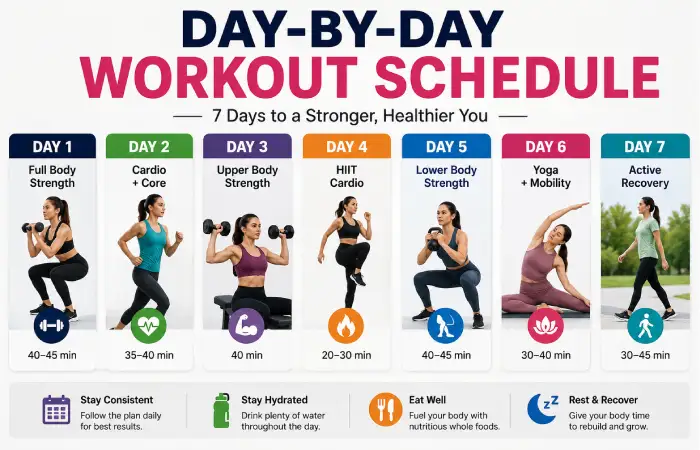
These plans are based on basic strength-training methods along with cardivascular exercise, flexibility & recovery and have designed to get you real results the natural way.
Day 1 – Full Body Strength Training
Duration: 40–45 minutes
The more you add to your body of muscle from weight training, the more you burn off whether relaxing and lounging or getting your exercise on.
On days when you have limited time, a full-body workout for female weight loss can help you train several major muscle groups in one efficient session.
Workout
- Squats with Bodyweight – 3 sets x 12 reps
- Plank with Bodyweight – 3 sets x 30 seconds
- Push ups with Wall or Knees – 3 sets x 10 push ups
- Glute Bridges with Bodyweight – 3 sets x 15 reps
- Rows bent-over dumbbell – 3 sets x 12 reps
It concludes with 10 minutes of walking, a little stretching.
Strength work should also have a place in your weekly routine. Learn how strength training for female weight loss can complement cardio and help you build a stronger, more capable body.
Beginner Tip
Focus on proper technique before increasing weight.
Day 2 – Cardio and Core
Duration: 35–40 minutes
Doing cardio exercise is the best option for promoting the health of the heart. Also known as aerobic exercise it makes your body work hard to receive sufficient amounts of oxygen which burns more calories than strength training exercises. Core stability is a function that core exercises directly contribute to promoting better posture and balance.
Cardio Options
Choose one:
- Brisk Walking
- Cycling
- Elliptical
- Swimming
- Light Jogging
Core Circuit
Complete three rounds:
- Bird Dogs – 12 reps
- Side Plank – 20 seconds each side
- Bicycle Crunches – 15 reps
- Dead Bugs – 12 reps
Pace of play. The kind you can carry on a conversation in but it still leaves your moderately challenged
Day 3 – Upper Body Strength
Duration: 40 minutes
Workout
- Dumbbell Shoulder Press – 3 sets × 12 reps
- Lat Pulldown or Resistance Band Rows – 3 sets × 12 reps
- Bicep Curls – 3 sets × 15 reps
- Tricep Extensions – 3 sets × 15 reps
- Chest Press – 3 sets × 12 reps
Day 4 – HIIT Cardio
Duration: 20–30 minutes
For training on an alternating basis – using very short but high bursts of work combined with recovery – individuals high-intensive style training can obtain better results, in less time with this format of cardio compared to others.
You can also incorporate short, challenging cardio sessions such as a HIIT workout plan for female fat loss, provided the intensity matches your fitness level.
Example Circuit
Perform each exercise for 30 seconds, followed by 30 seconds of rest.
- Jumping Jacks
- High Knees
- Bodyweight Squats
- Mountain Climbers
- Modified Burpees
Repeat the circuit 4–5 times depending on your fitness level.
Day 5 – Lower Body Strength
Duration: 45 minutes
Workout
- Goblet Squats – 3 sets × 12 reps
- Romanian Deadlifts – 3 sets × 12 reps
- Calf Raises – 3 sets × 20 reps
- Walking Lunges – 3 sets × 10 each leg
- Step-Ups – 3 sets × 12 each leg
Day 6 – Yoga and Mobility
Duration: 30–40 minutes
Focus on:
- Cat-Cow Stretch
- Child’s Pose
- Cobra Stretch
- Downward Dog
- Hip Openers
- Hamstring Stretch
- Deep Breathing Exercises
Day 7 – Active Recovery
Duration: 30–45 minutes
Choose one activity:
- Leisurely Walk
- Easy Cycling
- Light Swimming
- Gentle Hiking
- Stretching Session
Weekly Workout Overview
| Day | Estimated Calories Burned* | Workout | Duration |
| Monday | 250–350 | Full Body Strength | 45 min |
| Tuesday | 250–400 | Cardio + Core | 40 min |
| Wednesday | 220–320 | Upper Body | 40 min |
| Thursday | 300–450 | HIIT | 25 min |
| Friday | 280–400 | Lower Body | 45 min |
| Saturday | 120–200 | Yoga & Mobility | 35 min |
| Sunday | 100–180 | Active Recovery | 30–45 min |
Why This Schedule Is Effective
Instead of a program that’s pure cardio like many others, this balanced schedule consists of:
- Strength work to maintain muscle mass even as you shed fat
- Cardiovascular exercises to improve heart health, and burning more calories
- HIIT sessions for faster cardio
- Mobility training for flexibility
- Rest and recovery days to help fight fatigue and injuries
This is more sustainable, less restrictive and can be followed long term for great results.
Rest and Recovery
It’s a common assumption that simply increasing the intensity each day you work out is the fastest way to shed pounds, but if anything, your body works out as it rebuilds itself on those workout rest days! In these days off between workouts, your muscle tissues that were damaged work to heal themselves, energy gets stored, and your system adapts. Take these rest days to aid recovery and prevent yourself from burning out or even getting injured!
Why Recovery Matters
Recovery helps you:
- Repair muscle tissue after strength training
- Reduce soreness and fatigue
- Improve workout performance
- Prevent overtraining and injuries
- Support healthy hormone balance
- Stay consistent with your fitness routine
Recovery Checklist
| Benefit | Recovery Habit | Recommendation |
| Muscle repair and hormone regulation | Sleep | 7–9 hours per night |
| Supports performance and recovery | Hydration | 2–3 litres of water daily |
| Helps rebuild muscle tissue | Protein Intake | 20–30 g per meal |
| Improves flexibility and reduces stiffness | Stretching | 5–10 minutes after workouts |
| Prevents overtraining | Rest Days | 1 active recovery day weekly |
An expert hint: If feeling a bit stiff is part of working out, anything more and sharp pains, sustained soreness and inflammation are an indicator that you should cease what you’re doing and get professional advice if required.
Sample Weekly Calendar
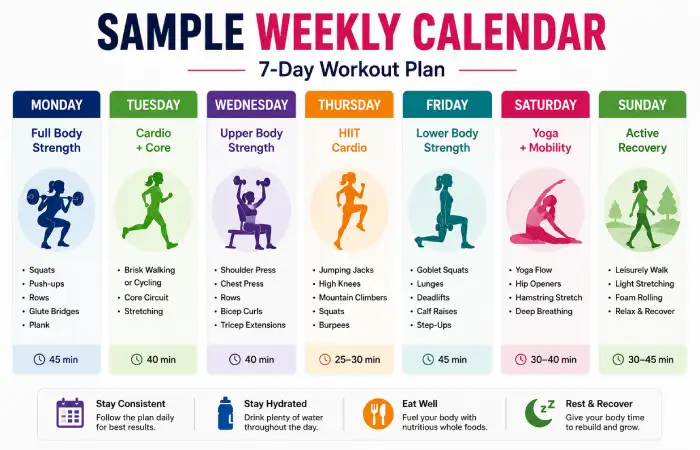
Use this simple calendar to stay organised and track your progress.
| Day | Goal | Workout | Duration |
| Monday | Build muscle and strength | Full Body Strength | 45 min |
| Tuesday | Burn calories and improve endurance | Cardio + Core | 40 min |
| Wednesday | Strengthen upper body | Upper Body Strength | 40 min |
| Thursday | Increase calorie burn | HIIT Cardio | 25 min |
| Friday | Develop lower-body strength | Lower Body Strength | 45 min |
| Saturday | Improve flexibility and recovery | Yoga & Mobility | 35 min |
| Sunday | Promote circulation and reduce fatigue | Active Recovery Walk | 30–45 min |
Weekly Goal: 150-300 minutes moderate exercise per week, at least two sessions strength training – following generally recognised advice on physical activity.
Tips for Better Results
You won’t achieve ideal results on just the exercise part. What and how you eat is just as if not more than of crucial to healthy weight reduction than exercise alone.
- Eat Enough Protein
Good protein sources include:
- Eggs
- Greek yoghurt
- Chicken breast
- Fish
- Lentils
- Beans
- Tofu
- Cottage cheese
- Prioritise Whole Foods
Choose foods that are naturally rich in nutrients:
- Fruits
- Vegetables
- Whole grains
- Lean proteins
- Nuts and seeds
- Stay Hydrated
Dehydration, even slight, impact our performance in our workouts.
General hydration tips:
- Drink some water through out the day.
- Take in extra fluid after extreme work out and with heavy sweat.
- Take in Electrolyte drinks after an extended lengthly or heavy exercise workout.
- Don’t Skip Breakfast
Example:
- Oatmeal with berries
- Greek yoghurt
- Boiled eggs
- A banana
- Plan Your Meals
Meal Planning helps us avoid our bad eating habits in these busy days and not taking the exact calories needed for the day.
If you prefer exercising without a gym, you can adapt this routine with a home workout plan for female weight loss using bodyweight exercises and minimal equipment.
Nutrition Tips for Better Results
Stay Consistent
Trying that for weeks is way better then doing a week with some extremely high intensity working out and that’s it, no good results really.
Increase Daily Movement
In addition to workouts:
- Take the stairs
- Walk after meals
- Stand up every hour
- Park further away from entrances
Track Your Progress
Rather than relying only on the scale, monitor:
- Waist circumference
- Progress photos
- Strength improvements
- Energy levels
- Workout completion
Warm Up Before Every Workout
Spend 5–10 minutes preparing your body with:
- Arm circles
- Leg swings
- Bodyweight squats
- Marching in place
- Light jogging
Progress Gradually
Increase only one variable at a time:
- Weight
- Repetitions
- Sets
- Workout duration
This approach helps reduce the risk of injury. (WHO)
2026 Fitness Comparison Table
| Workout Type | Weekly Frequency | Best For | Difficulty |
| Strength Training | 2–4 days | Building muscle and boosting metabolism | Moderate |
| Brisk Walking | 3–7 days | Beginners and active recovery | Easy |
| HIIT | 1–2 days | Improving fitness in less time | High |
| Yoga | 1–3 days | Flexibility and recovery | Easy |
| Cycling | 2–4 days | Low-impact cardio | Easy–Moderate |
| Swimming | 1–3 days | Full-body conditioning | Moderate |
Weekly Workout Balance
| Exercise Type | Percentage of Weekly Plan |
| Strength Training | 43% |
| Cardio | 29% |
| HIIT | 14% |
| Mobility & Yoga | 7% |
| Active Recovery | 7% |
FAQs
Is a 7-day workout plan safe?
Yes, as long as there’s a balance between high-intensity workouts and lower-intensity sessions like yoga and active recovery. It’s not every day that must be high intensity.
Can this workout plan be done by beginners?
Certainly! People at the beginner level may prefer shorter durations, doing bodyweight training in the start and progressively building their stamina in a period of time.
Can I lose weight with this workout plan?
Workout program and eating a nutrient-rich and balanced caloric diet deficit may lead you towards losing healthy weight regularly.
Do I need to get a gym membership?
No. Most of the exercises provided in the routine require no equipment other than what can be done using one’s body weight, resistance band, or some light weights at home.
What if I miss a workout session?
Don’t try to get ahead and do two workouts in a day. Stick to the schedule and continue from the next day onwards.
Should I be doing workouts daily?
We suggest staying mobile, but workouts don’t always mean you have to exert yourself vigorously.
Alternate your high intensity with recovery activities that help your body build stronger and prevent injuries.
Conclusion
The 7-Day Training Schedule is far more than just a plan: It is a functional guide that will help you establish healthy habits and improve your body. Including resistance training, cardio, and mobility as well as active recovery you can create a workout that contributes to weight loss without significant muscle wastage or potential for injury.
It’s crucial to not forget that it is consistency, not excellence that leads to results, so combine this training with good diet and rest and monitor your progress as opposed to fixating on the scales. Whether your aims are the burning of fat, increased stamina or simply to add more movement into your life, this plan is the foundation you need to continue growing.
Afiya Jafar is a fitness and wellness writer who focuses on making health, exercise, and healthy lifestyle information simple and practical. Her work covers workouts, fitness motivation, strength training, nutrition, weight management, stress management, mindfulness, and everyday wellness.
Read Full Bio of Afiya Jafar →
Sameena Begum reviews selected health, wellness, fitness, and digital content for clarity, factual presentation, consistency, and reader usefulness. Her review work helps maintain clear and responsible editorial standards across PhysicalFitt content.
Read Full Bio of Sameena Begum →
Dr. Khizrana Begum is a qualified medical professional with MBBS and MD qualifications and 5+ years of experience in the medical field. She works as a General Physician and Dermatologist, with expertise in general medicine, dermatology, preventive healthcare, and skin health.
Read Full Bio of Dr. Khizrana Begum →