
 Afiya Jafar
Fitness & Wellness Writer
Afiya Jafar is a fitness and wellness writer who focuses on making health, exercise, and healthy lifestyle information simple and practical.
Read Full Bio of Author →
Afiya Jafar
Fitness & Wellness Writer
Afiya Jafar is a fitness and wellness writer who focuses on making health, exercise, and healthy lifestyle information simple and practical.
Read Full Bio of Author →
 Sameena Begum
Health, Fitness & Digital Content Reviewer
Sameena reviews selected health, wellness, fitness, and digital content for clarity, factual presentation, and reader usefulness.
Read Full Bio of Reviewer →
Sameena Begum
Health, Fitness & Digital Content Reviewer
Sameena reviews selected health, wellness, fitness, and digital content for clarity, factual presentation, and reader usefulness.
Read Full Bio of Reviewer →
 Dr. Khizrana Begum
General Physician & Dermatologist
Dr. Khizrana Begum is a General Physician and Dermatologist with MBBS and MD qualifications and 5+ years of experience in the medical field.
Read Full Bio of Medical Reviewer →
Dr. Khizrana Begum
General Physician & Dermatologist
Dr. Khizrana Begum is a General Physician and Dermatologist with MBBS and MD qualifications and 5+ years of experience in the medical field.
Read Full Bio of Medical Reviewer →
Medicines are prescribed to combat disease, manage chronic health conditions, to relieve the side effects of an illness, to ameliorate any discomfort associated with various issues and to improve overall the quality of your life. However, how they are used and the potential side-effects are entirely dependent upon what the drug actually is, the dosage and reason given for taking it; your illness and age; any other drugs that you take simultaneously and a range of other health aspects. The more you are familiar with both what a drug does and any side-effects and interactions that you need to look out for, the more safely it can be taken.
No drugs are entirely without their benefits and dangers, however according to the FDA: ‘FDA approval is an assurance that a medicine has been found safe and effective; FDA-approved medicines have been proven to pose known or potential risks to the user’ (though the balance between risk and expected benefit is considered by the FDA.)
❝
This article is a part of
Medicines Hub
How Medication Uses Are Determined
A medication’s use refers to the condition, symptom, or disease it is intended to treat, prevent, or manage.
Understanding the uses and potential side effects of common medications can help people make more informed decisions about their treatment.
Doctors consider several factors when selecting a medication, including:
- The condition being treated
- Severity and duration of symptoms
- Age and overall health
- Other medications and supplements
- Allergies and previous medication reactions
- Kidney and liver function
- Pregnancy or breastfeeding status
- Potential drug interactions
For instance, medicines in similar therapeutic classes can be highly different with regards to their indications and safety profiles. A painkiller, antihistamine, antibiotic, antidepressant, or blood pressure tablet can not be assumed to be equivalent because it shares a broad class category with another drug.
It is not assumed that the ideal medication is the one with the fewest side effects; but the drug which’s perceived risk vs benefits are acceptable to the individual patient.
Understanding Medication Labels
Reading the label is one of the simplest ways to reduce medication errors.
Prescription and OTC medication information can tell you:
| Label information | Why it matters |
| Active ingredient | Identifies the medicine |
| Strength | Shows how much medication is present |
| Uses | Explains what the medicine treats |
| Directions | Explains how and when to take it |
| Warnings | Highlights important safety concerns |
| Side effects | Identifies possible unwanted reactions |
| Drug interactions | Lists medicines, foods or substances to avoid |
| Storage | Helps maintain medication quality |
| Expiration date | Indicates when the product should no longer be used |
Different allergy medications may be used to relieve symptoms such as sneezing, itching, congestion, and watery eyes.
Your Prescription Medication Guides may include information about directions for use, individuals for whom use of the medication is recommended or discouraged, along with descriptions of side effects both common and rare, serious and relatively mild.
For Over-the-counter products, the Drug Facts label is the primary source of medication information.
Common Medication Side Effects

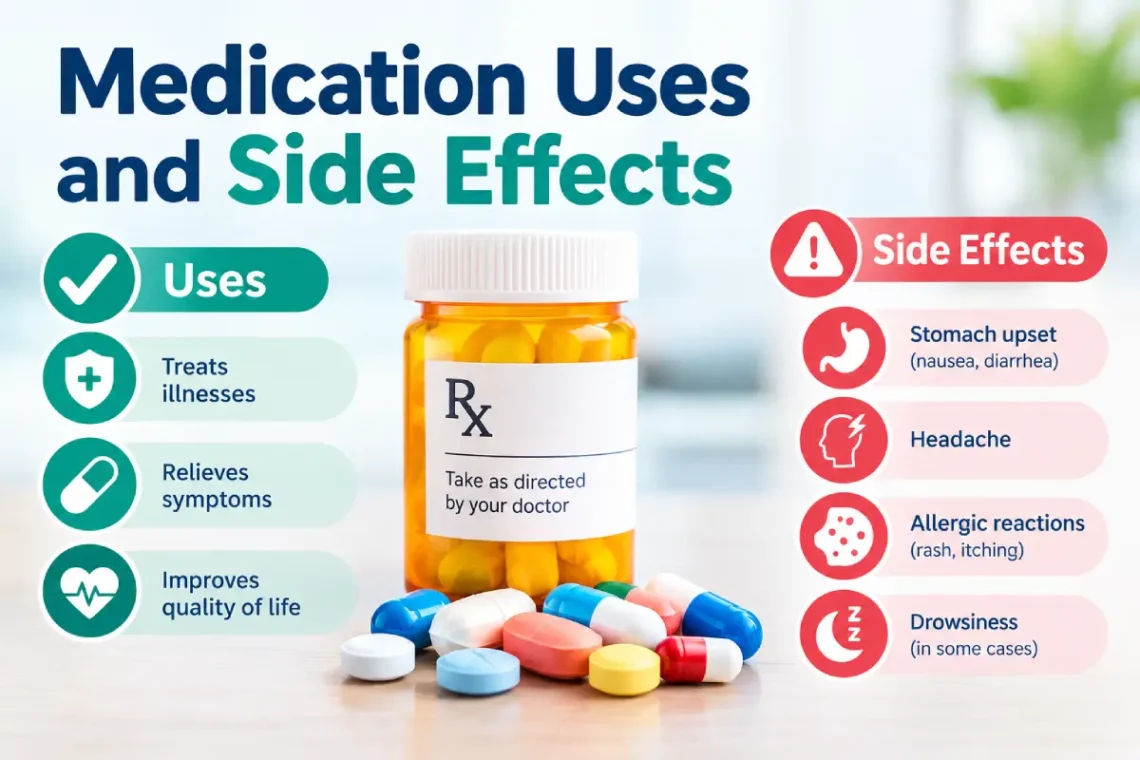
A side effect is an unwanted effect that may occur while taking a medication. Common examples include:
- Nausea or upset stomach
- Headache
- Dizziness
- Drowsiness
- Dry mouth
- Constipation or diarrhea
- Mild skin irritation
- Changes in appetite
The precise nature of the side effect depends upon the medicine. For instance some antihistamines might cause sleepiness but some pain medicines might make you feel queasy stomach. Some high blood pressure medicines can make your head feel light on your feet; some medicines may decrease appetite or disturb sleep.
Upset stomach, dry mouth and sleepiness are some common side effects of medicines stated by the FDA.
Over-the-counter medications for cold symptoms may help reduce congestion, coughing, fever, and other temporary discomforts.
A side effect of a drug is not automatically dangerous for instance your body might soon become acclimatised to some minor reactions or the dose might need to be increased or some other drug should be tried.
Serious Medication Side Effects
Some medication reactions require prompt medical attention.
Seek urgent medical help for symptoms such as:
- Difficulty breathing
- Swelling of the face, lips, tongue, or throat
- Fainting or severe dizziness
- Severe or rapidly spreading rash
- Chest pain
- Seizures
- Severe confusion
- Unusual bleeding
- Severe or persistent vomiting
- Signs of significant liver or kidney problems
The FDA considers serious adverse events to include outcomes such as death, life-threatening reactions, hospitalization, disability, or permanent damage.
Do not assume that a severe reaction will disappear on its own.
How Long Side Effects Can Last
There is no universal timeframe for medication side effects.
Some reactions may occur shortly after taking a dose and disappear within hours. Others can continue for days or longer, particularly if the medicine remains in the body for an extended period.
Unlike over-the-counter products, prescription medications require authorization from a qualified healthcare professional.
Duration can depend on:
- The medication’s half-life
- Dose and frequency
- How long you have been taking it
- Your age and metabolism
- Kidney and liver function
- Other medications
- Whether treatment was stopped or changed
Medication Dosage and Timing
Taking the correct medication at the correct dose and time is an important part of safe treatment.
Follow the prescription or package instructions rather than changing the dose yourself.
Pay attention to instructions such as:
- Take with food
- Take on an empty stomach
- Take once daily
- Take every 6 or 8 hours
- Take only when needed
- Do not crush or chew
- Complete the prescribed course
Forgot a dose? Refer to the medicine instructions or check with your pharmacist. Never give an extra dose to “catch up”.
FDA encourages people who have questions about doses, schedules,missed doses, and eating/food, other medicines and supplements to speak with their health care providers.
Drug Interactions
A drug interaction happens when one medicine, food, beverage, supplement, or medical condition changes how another medicine works.
Three common types of interactions
| Interaction | Example |
| Drug–drug | Two medicines affect each other’s effects |
| Drug–food/beverage | Food or alcohol changes medication effects |
| Drug–condition | An existing condition makes a medicine less suitable |
Interactions can make a medication less effective or increase the likelihood of unwanted effects.
Always tell your doctor or pharmacist about:
- Prescription medicines
- OTC medicines
- Vitamins
- Herbal products
- Dietary supplements
This is especially important when starting a new medicine.
Allergic Reactions to Medications

A medication allergy is different from an ordinary side effect.
A side effect is a known possible reaction to a medicine, while a drug allergy involves an immune-system response.
Common signs of a drug allergy may include:
- Hives
- Rash
- Itching
- Fever
- Swelling
A severe allergic reaction called anaphylaxis can cause breathing difficulty, throat swelling, fainting, or other potentially life-threatening symptoms.
Practicing good medication safety is important to reduce the risk of incorrect dosing, adverse reactions, and accidental misuse.
Breathing difficulty or swelling of the throat, tongue, or face requires emergency medical attention.
What to Do About Side Effects
If you develop a possible side effect:
- Check the medication information.
Look at the prescription information or Drug Facts label. - Note what happened.
Record the symptom, when it started, and when you took the medication. - Contact your pharmacist or healthcare professional.
They can help determine whether the symptom may be medication-related. - Don’t make major medication changes yourself.
Stopping some medicines suddenly can create additional problems. - Report serious reactions when appropriate.
In the United States, serious medication problems can be reported through the FDA’s MedWatch system.
The FDA also recommends maintaining an up-to-date list of prescription drugs, OTC medicines, vitamins, and supplements.
When to Seek Medical Attention
Call a healthcare professional promptly if a side effect is persistent, worsening, unusually severe, or interfering with normal activities.
People who take multiple medicines should understand potential medication interactions, as one drug may affect how another works.
Seek emergency medical care for symptoms such as:
| Symptom | Urgency |
| Difficulty breathing | Emergency |
| Throat/tongue swelling | Emergency |
| Fainting or severe weakness | Emergency |
| Seizure | Emergency |
| Severe chest pain | Emergency |
| Severe allergic reaction | Emergency |
| Severe or rapidly worsening symptoms | Urgent evaluation |
Do not wait for a routine appointment when symptoms suggest a potentially life-threatening reaction
Conclusion
Familiarizing oneself with medication benefits and side effects is a crucial aspect of medicine use. Each medicine is designated for specific use or purpose, dosage and side effects, as well as drug interactions, to be known prior to the use of medicine and throughout its duration. Minor symptoms and side effects may easily be tolerable or they may be transient; however, severe and pronounced symptoms such as breathing difficulties, facial/tongue or throat swellings, convulsing, and even falling and/or extreme allergies are known to require acute medical care.
It is paramount to take medicines exactly as dictated by labels and physician/pharmacist instructions and to provide them with details about every supplement you use along with your Rx drugs.
By comprehending medicine indications, dosage and warning signs for side effects, well-informed medicine therapy choices can be readily made. It’s also essential to refer all of your Rx drugs as well as vitamins and all non-prescription drugs to those mentioned above; do not hesitate to inquire for clarification from a healthcare provider.
Afiya Jafar is a fitness and wellness writer who focuses on making health, exercise, and healthy lifestyle information simple and practical. Her work covers workouts, fitness motivation, strength training, nutrition, weight management, stress management, mindfulness, and everyday wellness.
Read Full Bio of Afiya Jafar →
Sameena Begum reviews selected health, wellness, fitness, and digital content for clarity, factual presentation, consistency, and reader usefulness. Her review work helps maintain clear and responsible editorial standards across PhysicalFitt content.
Read Full Bio of Sameena Begum →
Dr. Khizrana Begum is a qualified medical professional with MBBS and MD qualifications and 5+ years of experience in the medical field. She works as a General Physician and Dermatologist, with expertise in general medicine, dermatology, preventive healthcare, and skin health.
Read Full Bio of Dr. Khizrana Begum →